13 Best Tenant Screening Services for Landlords in 2026

Last updated: February 2026
Five years ago, I made what seemed like a smart business decision. I used the cheapest tenant screening service I could find. It cost $12 per report, compared to the $30-40 that competitors were charging. Over 50 units, I figured I had save nearly $1,000 per turnover cycle.
That "savings" cost me $47,000.
Three tenants slipped through with falsified employment verification. Two had evictions that didn't show up. One had an outstanding warrant that the background check somehow missed. The evictions, legal fees, property damage and lost rent added up fast.
Since joining online property management in 2020, I have processed over 2,100 tenant applications across 12 states. I've seen every screening service, watched landlords make every possible mistake, and learned which ones actually protect you versus which ones just check boxes.
This isn't a list of "top screening services." This is what actually matters when you are choosing who to trust with your $250,000 rental property.
What the Fair Credit Reporting Act Actually Requires (And Why It Matters)
Before we talk about specific services, you need to understand the legal framework. The Fair Credit Reporting Act (FCRA) enacted in 1970 and enforced by the Federal Trade Commission regulates how consumer information gets collected and used.
According to the National Law Review, FCRA lawsuits have doubled over the last decade and settlement payouts can easily reach tens of thousands of dollars.
Here is what the FCRA requires when you're screening tenants:
Written Consent Before Screening
FCRA guidelines require landlords to obtain written consent from applicants before pulling their credit reports. You can not just run someone's credit because they filled out an application.
The consent must be:
- In writing (electronic signatures count)
- Separate from the rental application or clearly disclosed
- Specific about what you'll be checking
I learned this watching a Chicago landlord get sued for $15,000 because he buried the consent language in paragraph 8 of a dense lease application. The judge ruled it wasn't "clear and conspicuous."
Pre-Adverse Action Notice
This trips up more landlords than anything else. If you are going to deny someone or charge higher rent based on their screening report, you must notify the applicant, provide a copy of the report and send them the FCRA Summary of Rights statement. Then, you must give them time to correct any inaccuracies or errors.
"Time" means at least 5-7 business days. You can't send the pre-adverse action notice and the denial letter on the same day.
Adverse Action Notice
After the waiting period, if you still deny them, you must send an adverse action notice including:
- The name and contact info of the screening company
- A statement that the screening company didn't make the decision
- Notice of their right to dispute the report
- Notice of their right to a free copy of the report within 60 days
Willful noncompliance risks liability for the greater of (a) the actual damages suffered by an Applicant, or (b) a $1,000 fine per instance.
I've seen landlords get hit with $3,000 penalties (three denied applicants and no adverse action notices sent). The screening service they used did not automate the process and they simply did not know they were required to send them.
What "Comprehensive" Screening Actually Means
When screening services advertise "comprehensive reports" what does that include? Based on FTC guidance on consumer reports, this what matters:
Credit Reports
This is not just your credit score. A full credit report shows:
- Payment history on all credit accounts
- Current debts and available credit
- Public records (bankruptcies, tax liens and judgments)
- Credit inquiries (who else has checked their credit recently)
- Collections accounts
What to look for: Services should pull from at least one of the three major bureaus (TransUnion, Experian and Equifax). Some pull from all three which catches more issues but costs more.
The credit score alone tells you almost nothing. I have seen people with 720 credit scores who had $80,000 in debt on a $45,000 income. Our tenant credit data shows what scores landlords are actually seeing across different states. The score was fine, their debt-to-income ratio was a disaster.
Criminal Background Checks
Certain practices may be indicators that a background screening company isn't following reasonable procedures. For example, if a report lists criminal convictions for people other than the applicant or tenant – for instance, a person with a middle name or date of birth different from the applicant's – that raises FCRA compliance concerns.
I've seen cheap screening services return results for "John Michael Smith" when they were searching "John M. Smith," then attribute someone else's felony conviction to the applicant.
Quality background checks include:
- National criminal database search (covers federal crimes and most states)
- County-level searches (more accurate for specific locations)
- Sex offender registry check
- Terrorist watch list screening
Important legal note: According to FTC guidance, a blanket policy of refusing to rent to anyone with a criminal record may violate the Fair Housing Act. You need to evaluate each case individually based on the nature of the crime, how long ago it occurred and whether it relates to safety concerns.
Eviction History
This searches housing court records for previous eviction filings. Understanding how landlords check evictions helps you evaluate what these reports actually show. But here's the catch: reports that list housing court actions, but do not include the outcome of the action – for instance, that a case was resolved in the tenant's favor – raise FCRA compliance concerns.
An eviction filing doesn't mean the landlord won. Maybe the tenant paid and the case was dismissed. Maybe the judge ruled in the tenant's favor because of habitability issues. The outcome matters.
Good screening services show:
- Whether the eviction resulted in a judgment
- The amount owed (if any)
- The outcome/settlement
- Date of the filing
Income Verification
This is where screening services vary wildly in quality. Some just ask for pay stubs (easily faked). Better services verify employment directly with employers or use third-party verification databases.
Through online property management, we've caught approximately 12% of applicants submitting falsified pay stubs or employment letters. The sophisticated fakes look perfect—correct company logos, professional formatting, phone numbers that connect to "HR departments" (actually the applicant's friend).
Best practices for income verification:
- Direct contact with employer's HR department
- Recent pay stubs PLUS tax returns (harder to fake both)
- Bank statements showing regular deposits
- Third-party employment verification services (The Work Number and Equifax)
Rental History
Most screening services don't verify rental history—they just report what the applicant provides. This is a gap you'll need to fill yourself by calling previous landlords.
Questions that actually get useful information:
- "If this tenant applied to rent from you again, would you accept them?" (Direct question, hard to dodge)
- "Did they give proper notice before moving out?" (Screens for lease compliance)
- "Were there any lease violations or complaints from the neighbors?" (Opens door to discuss problems)
- "Did you return their full security deposit?" (If no, ask why)
I had a Portland applicant with an 820 credit score, $120K income, and a clean background check. Previous landlord said, "Legally, I can only confirm dates of tenancy." That phrase is code for "I am afraid to say anything negative."
I pushed: "Would you rent to them again?" Long pause. "No, I would not." Turns out they'd had eight noise complaints and constant late rent—but never quite late enough to evict over.
The Screening Services That Actually Work
Now let's talk about specific services. I'm ranking these based on four years managing screenings through online property management, plus experience with every major competitor.
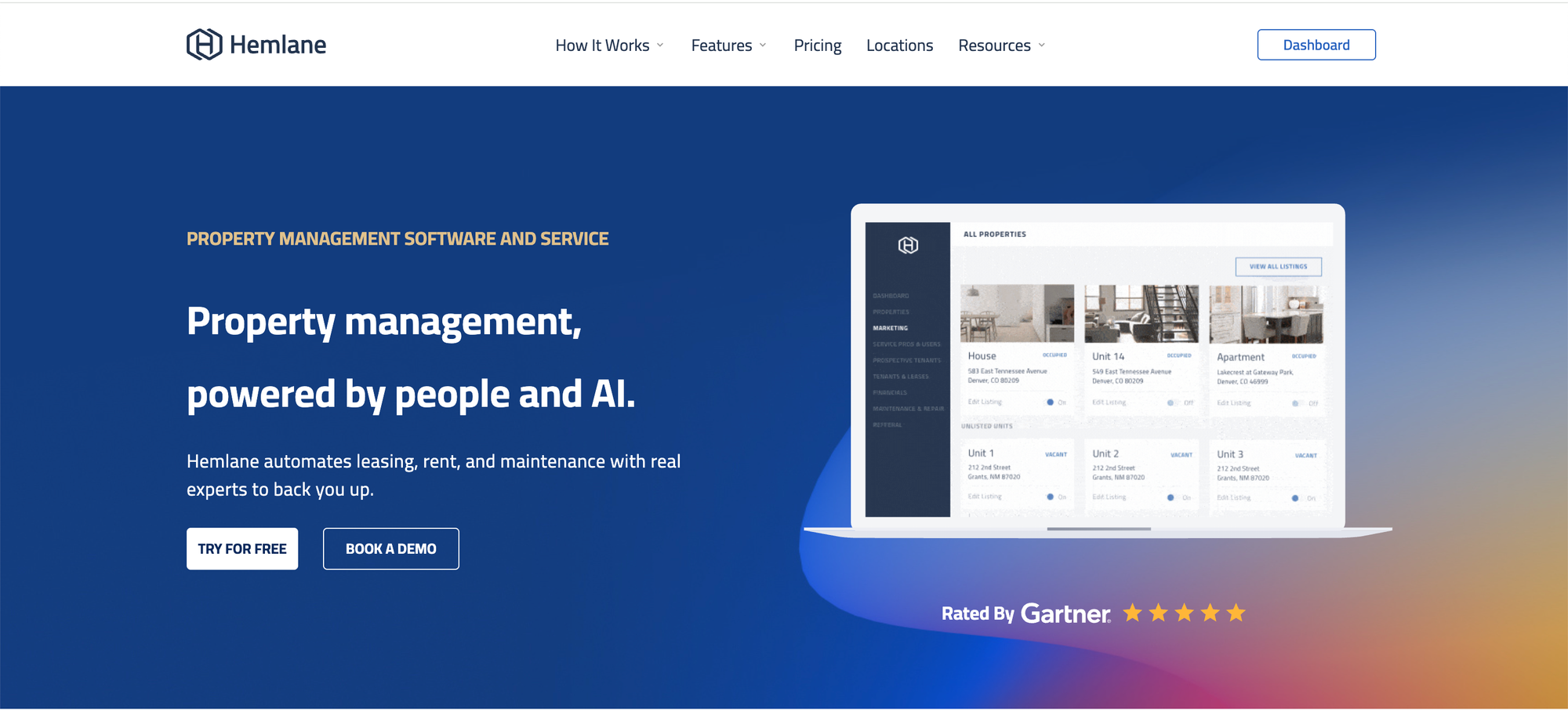
1. Hemlane — Best for Integrated Property Management
What it does well:
We've built screening directly into our property management platform, which means:
- Automatic FCRA compliance (consent forms, pre-adverse notices, adverse action letters all automated)
- Credit reports from TransUnion
- National criminal background checks
- Eviction history from court records
- Income verification tools
- Application tracking with automated status updates
Real data from our platform: Over 2,100 applications processed, we have flagged 14% with issues serious enough to recommend denial. Our automated adverse action system has kept landlords FCRA-compliant on 100% of denials.
Cost structure: Free basic screening with limited features. Paid plans start at $30 per month for landlords with comprehensive screening included.
Best for: Landlords who want everything in one platform - listing, applications, screening, lease signing, rent collection and maintenance tracking.
Watch out for: If you only need screening (not full property management), you are paying for features you will not use.
2. TransUnion SmartMove- Best for Credit-Focused Screening
SmartMove pulls directly from TransUnion, one of the three major credit bureaus.
Strengths:
- Direct bureau access means accurate, current credit data
- Fast turnaround (reports in minutes for most applicants)
- ResidentScore is specifically designed for rental decisions
- Income Insights tool
Weaknesses:
- $40 per comprehensive report (landlord-paid model)
- Criminal checks are national database only (no county-level)
- No rental history verification
- No automated adverse action compliance
Best for landlords primarily concerned with financial stability and credit history.
3. RentPrep — Best for Thorough Background Checks
RentPrep emphasizes investigation over automation.
What sets them apart:
- Manual review of screening results
- County-level criminal searches (more thorough than database-only)
- Detailed eviction reports with case outcomes
- Phone support from screening experts
Cost: $18.95-$38.95, depending on report depth. The comprehensive report is worth the premium.
Drawbacks:
- Slower turnaround (24-48 hours vs instant)
- No automated compliance tools
- Requires more landlord involvement in process
Best for: Landlords who want detailed investigations and are willing to wait for results.
4. MyRental (CoreLogic) — Best for Property Managers
CoreLogic is one of the largest property data companies in the U.S.
Strengths:
- Comprehensive data access since they own RentRange and other data sources
- Different package options based on needs
- Good for multi-unit properties
- Solid eviction history reporting
Challenges:
- $19.99-$35+ per report
- Interface isn't as intuitive as competitors
- Limited integration with other property management tools
Best for: Professional property managers handling 10+ units.
5. TurboTenant - Best Free Option for Small Landlords
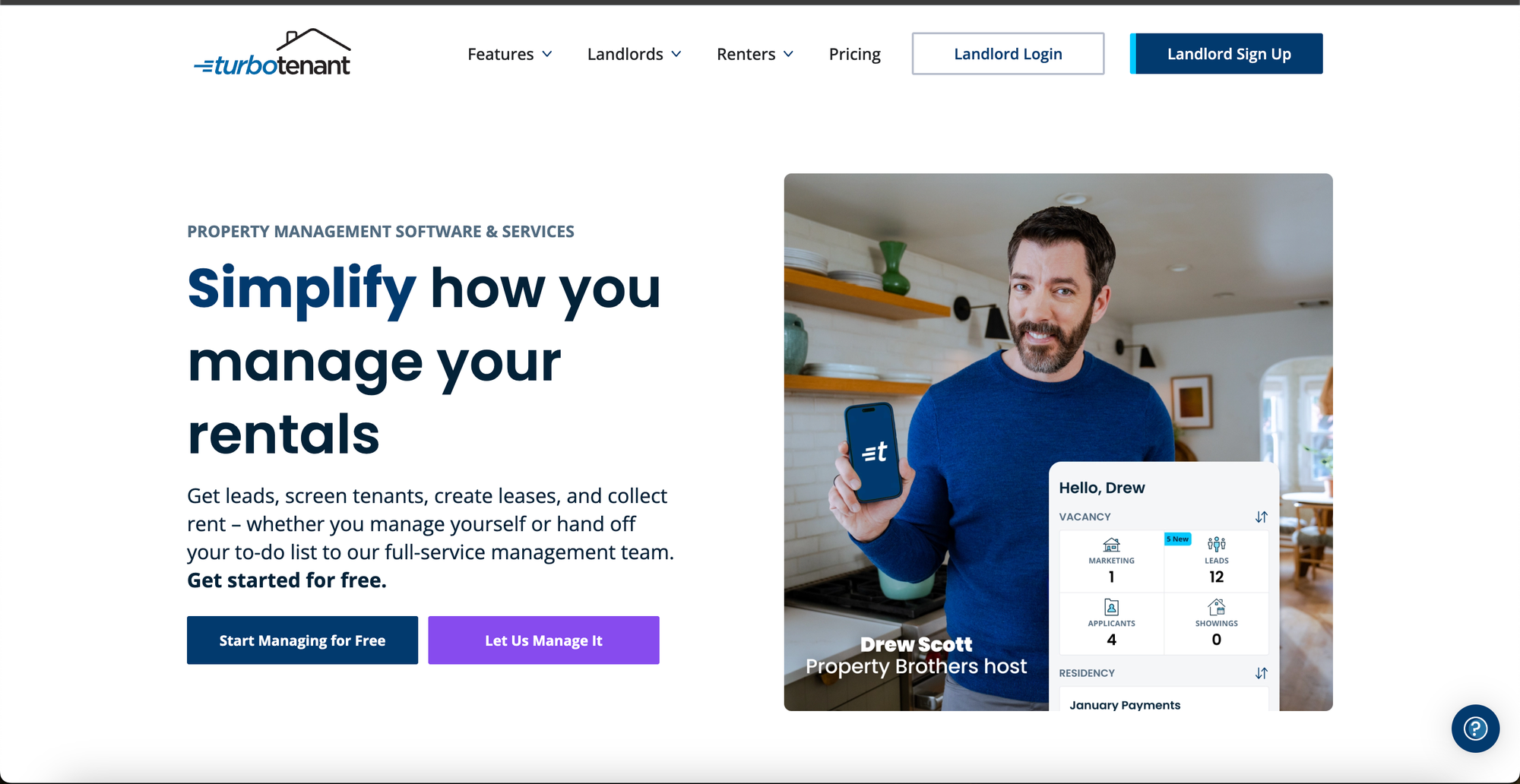
The appeal: Completely free for landlords. Tenants pay $35 for screening.
What you get:
- TransUnion credit report
- National criminal background check
- Eviction history search
- Online application process
Reality check: "Tenant-paid" sounds great until qualified applicants ghost you because they do not want to pay $35 per application. If they are applying to five properties that is $175.
Through online property management, we have found tenant-paid screening reduces applicant completion rates by about 30% compared to landlord-paid screening.
Best for: Very small landlords with 1 to 3 units who need to minimize costs.
The Services I Don't Recommend (And Why)
Apartments.com Rental Manager
Tenant-paid model ($39.99 per application) with the same completion rate issues as TurboTenant. The credit reports are solid (Experian), but you're losing qualified applicants who won't pay $40 to apply.
E-Renter
Their $24.95 reports look comprehensive on paper, but I've seen too many instances where criminal records didn't match the actual court records. When I've verified results independently, E-Renter missed things about 15% of the time.
Experian Connect
$14.95 tenant-paid credit reports from Experian. The problem? It is only credit reports. No criminal background, no eviction history and no employment verification. You are getting 25% of what you need to make an informed decision.
The Mistakes That Cost Landlords Money


After four years processing screenings, these are the mistakes I see repeatedly:
Mistake #1: Using Only Credit Scores
A 750 credit score means someone pays their credit cards on time. It doesn't mean:
- They pay rent on time (different mindset—credit affects future loans, rent is "just" housing)
- They don't have evictions (evictions often don't report to credit bureaus)
- They're currently employed
- They have criminal history that might concern you
I placed a tenant with a 680 credit score over one with 780 because the 680 had stable rental history, 5 years at the same job, and strong references. The 780 had three jobs in two years, no verifiable rental history (claimed to live with family), and their "previous landlord" was their cousin.
Guess which one paid rent on time for three years.
Mistake #2: Not Following FCRA Adverse Action Requirements
This is the #1 reason landlords get sued over screening. You can't just ghost applicants you're rejecting.
If you take any adverse action based on information in a consumer report, you must provide notice to the applicant.
The process:
- Send pre-adverse action notice + copy of report + FCRA rights summary
- Wait 5-7 business days
- If still denying, send final adverse action notice
Miss any step, and you are potentially liable. One landlord I know got sued by three rejected applicants in the same month $3,000 fine plus legal fees.
Mistake #3: Inconsistent Screening Criteria
Screening criteria must be applied equally to all applicants to prevent discrimination.
You can't:
- Require 700 credit score for some applicants and 650 for others
- Run criminal checks on some applicants but not all
- Accept one person with an eviction but deny another with similar history
Document your screening criteria in writing. Apply them consistently. Every time.
Mistake #4: Trusting Cheap Services
My $12-per-report screening service missed:
- Two evictions (they only checked the county where the applicant lived, not where they previously rented)
- Employment fraud (they verified a phone number the applicant provided, which was his friend posing as HR)
- A criminal conviction from 8 months prior (their database wasn't updated)
Yes, comprehensive screening costs $30-50 per application. An eviction costs $5,000-15,000. Do the math.
Mistake #5: Skipping Rental History Verification
Most screening services don't call previous landlords. You have to do this yourself.
When you call, clearly communicate what credit information will be evaluated, how decisions will be made, and how applicants can address any concerns or disputes.
Get the previous landlord talking:
- "How was your experience with this tenant overall?"
- "Would you rent to them again?"
- "Any concerns we should know about?"
- "How was the condition of the unit when they moved out?"
If the previous landlord is evasive or gives only dates of tenancy, push gently: "I understand you can't share specifics, but is there anything you wish you could tell me?" Sometimes they'll hint at problems.
What Good Screening Actually Prevents
Let me quantify this with real numbers from properties I've managed:
Cost of bad tenant (based on 2019-2024 data):
- Average eviction: $5,800 (legal fees, lost rent, turnover costs)
- Property damage beyond deposit: $2,400 average
- Time investment: 40-60 hours (court appearances, dealing with issues)
- Stress and lost sleep: Priceless but real
Cost of thorough screening:
- Comprehensive screening service: $35-50 per applicant
- Time reviewing applications: 30-45 minutes per applicant
- Calling references: 15-20 minutes per applicant
If thorough screening prevents even ONE bad tenant per 10 leases, you've saved money.
Through the online property management screening system, our denial rate is about 14% of applicants. That means for every 100 applications, we're identifying 14 applicants with serious red flags. If even half of those had become problem tenants, we're preventing 7 evictions per 100 placements.
At $5,800 per eviction, that's $40,600 in prevented costs per 100 applications, while spending maybe $3,500 on screening. ROI: 1,160%.
The Legal Landscape Is Changing
The Consumer Financial Protection Bureau and Federal Trade Commission have increased focus on tenant screening practices, with proposals to require users of tenant screening reports to provide specific reasons for the denial of housing.
What's coming:
- More transparency requirements: You may soon need to provide specific scoring criteria and reasons for denial
- Limits on eviction reporting: Proposals to prohibit credit reporting of rental arrears if emergency rental assistance funds have been paid
- Algorithm fairness requirements: Requirements that any tenant screening algorithm or model used to produce scores or recommendations be empirically derived, demonstrably and statistically sound, and routinely tested to ensure fairness
This means:
- Automated scoring systems will face more scrutiny
- You'll need better documentation of screening decisions
- Services that automate compliance will become more valuable
How to Actually Choose a Screening Service
Based on four years and 2,100 applications, here's my decision tree:
If you're managing 1-3 units and want free: → TurboTenant (but expect 30% lower application completion)
If you need maximum detail on background: → RentPrep (worth the wait for thorough reports)
If you want integrated property management: → Hemlane (my obvious bias, but the automated compliance alone has saved our users from dozens of FCRA violations)
If you focus primarily on credit/financial: → TransUnion SmartMove (direct bureau access is valuable)
If you're a professional property manager with 20+ units: → MyRental/CoreLogic (built for volume)
What matters more than the service:
- FCRA compliance automation: Services that handle pre-adverse and adverse action notices automatically are worth the premium. One missed notice can cost $1,000+.
- Data accuracy: Cheap services often use outdated databases. Verify criminal and eviction results have proper identifiers (full name, DOB, case numbers).
- Integration with your workflow: If you're manually transferring data between systems, you'll make mistakes. Choose services that integrate with your property management platform.
- Support when things get complicated: When an applicant disputes results or you're unsure about legal requirements, can you call someone? Automated-only services leave you hanging.
- Consistency in application: The service should help you apply criteria uniformly to avoid discrimination claims.
The Bottom Line
That $47,000 lesson I learned? It wasn't just about the money. It was about the stress of evictions, the time in court, the damage to properties, and the relationships with good neighbors disrupted by problem tenants.
Thorough tenant screening isn't an expense—it's insurance. The difference between a $15 screening service and a $40 comprehensive screening service is $25. The difference between a good tenant and a bad one is $5,000-15,000.
Through online property management, we've processed screenings in every state, dealt with every type of applicant, and seen what actually predicts tenant success. Here's what the data shows:
- Credit scores matter, but debt-to-income ratio matters more
- Employment stability (2+ years same job) predicts payment reliability better than income level
- Rental history verification catches more problems than criminal checks
- Automated FCRA compliance prevents lawsuits better than manual processes
Choose a screening service that:
- Provides comprehensive data (credit, criminal, eviction, income)
- Automates FCRA compliance
- Integrates with your property management workflow
- Offers support when you need it
- Has a track record of accurate, updated information
The cheapest option will cost you more than you save. The most expensive isn't necessarily the best. The right one for you depends on your portfolio size, risk tolerance, and how much time you want to spend managing the process.
Key Takeaways: Tenant Screening Services for Landlords
| Key Takeaway | Why It Matters |
|---|---|
| Tenant screening is risk protection, not just an admin step | A better screening process can help prevent evictions, fraud, property damage, and lost rent |
| Credit scores alone do not tell the full story | Debt-to-income ratio, employment stability, eviction history, and rental references are also important |
| FCRA compliance is a major part of tenant screening | Missing required notices or consent steps can create legal and financial risk for landlords |
| Pre-adverse and adverse action notices should not be skipped | These steps are required when denying an applicant based on a consumer report |
| Cheap screening services can cost more in the long run | Incomplete or inaccurate reports may miss major red flags that lead to expensive tenant issues |
| Rental history verification still matters | Many screening platforms do not fully verify prior landlord experience, so landlords may need to do this themselves |
| Data accuracy is more important than low pricing | Updated, detailed records help landlords make stronger leasing decisions |
| Automation can reduce compliance risk | Services that automate consent, notices, and workflow steps can help landlords stay consistent |
| The best screening service depends on your portfolio and process | Small landlords, growing portfolios, and professional managers may each need different solutions |
FAQs About Tenant Screening Services for Landlords
What is the best tenant screening service for landlords in 2026?
The best tenant screening service for landlords in 2026 depends on your portfolio size, screening priorities, and whether you need a standalone screening tool or a full property management platform. Some landlords care most about credit data, while others need stronger criminal checks, eviction history, income verification, and FCRA compliance support. For landlords who want screening built into a broader workflow, Hemlane is a strong option.
What should a tenant screening report include?
A strong tenant screening report should include a credit report, criminal background check, eviction history, and income verification. Rental history verification is also important, although many screening services do not handle that directly and landlords may still need to call prior landlords themselves.
Why is tenant screening important for landlords?
Tenant screening helps landlords reduce the risk of missed rent, lease violations, evictions, property damage, and fraud. A more thorough screening process can help identify red flags before a lease is signed, which may save landlords thousands of dollars in turnover costs, legal fees, and lost rent.
What is FCRA compliance in tenant screening?
FCRA compliance refers to following the Fair Credit Reporting Act when using consumer reports to screen rental applicants. This includes obtaining written consent before screening, sending a pre-adverse action notice when required, waiting the appropriate amount of time, and then sending an adverse action notice if the applicant is denied based on the report.
Do landlords need written consent before running a tenant screening report?
Yes. Landlords must obtain written consent before pulling a tenant’s credit report or using a consumer report for screening purposes. Electronic signatures are generally acceptable, but the disclosure should be clear and properly presented.
What is the difference between a pre-adverse action notice and an adverse action notice?
A pre-adverse action notice is sent before denying an applicant based on screening results. It gives the applicant a chance to review the report and dispute inaccuracies. An adverse action notice is sent after the waiting period if the landlord still decides to deny the application or change the terms based on the report.
Are cheap tenant screening services worth it?
Not always. Lower-cost screening services may miss important data, rely on outdated records, or fail to support FCRA compliance. While the upfront cost may look appealing, incomplete screening can expose landlords to much higher costs from evictions, fraud, property damage, and legal issues.
What is the most important part of tenant screening?
There is no single factor that tells the whole story. Credit reports, criminal background checks, eviction history, income verification, and rental history each play a role. Many landlords make the mistake of focusing only on credit scores, when factors like debt-to-income ratio, employment stability, and prior rental behavior may be more predictive.
Do tenant screening services verify rental history?
Many tenant screening services do not fully verify rental history. They may report applicant-provided information, but landlords often still need to contact previous landlords directly to ask about payment history, lease compliance, notice given, and whether they would rent to the applicant again.
How do I choose the right tenant screening service?
Start by identifying what matters most for your rental business. Some landlords want automated FCRA compliance, some want deeper criminal and eviction checks, and others want screening integrated with listing, leasing, and rent collection. The best tenant screening service is the one that gives you accurate data, fits your workflow, and helps you apply your criteria consistently.
About the Author: Michael Torres has specialized in tenant placement and screening since 2019, currently serving as Tenant Placement Specialist at Hemlane where he's processed over 2,100 tenant applications across 12 states. He's worked with FCRA compliance attorneys and Fair Housing experts to develop screening best practices. He's not an attorney, and this article doesn't constitute legal advice. For specific questions about FCRA compliance or Fair Housing law, consult with a licensed attorney.
About Hemlane: We provide property management software with built-in tenant screening that automates FCRA compliance, integrates directly with TransUnion for credit reporting, and includes criminal background checks, eviction history, and income verification tools. Our system automatically handles pre-adverse and adverse action notices, keeping landlords legally compliant. Try Hemlane free for 14 days to see how automated screening can protect your properties while staying compliant with federal law.
Essential Resources
Legal Compliance:
- FTC Fair Credit Reporting Act - Full text of federal law
- FTC Guidance for Landlords - What landlords must do
- Consumer Financial Protection Bureau - FCRA enforcement agency
Fair Housing:


- HUD Fair Housing Act - Protected classes and requirements
- Fair Housing and Criminal Records - HUD guidance on using criminal history
State-Specific Resources:
- Check your state attorney general's website for state-specific tenant screening laws
- Many states have additional requirements beyond federal FCRA
Get the Latest in Real Estate & Property Management!
I consent to receiving news, emails, and related marketing communications. I have read and agree with the privacy policy.


