
How to Safely Store Guns in Your Home or Apartment

Editorial Staff
Content published by Hemlane is created and reviewed by members of our editorial team, including experienced technical writers and real estate professionals.
Owning a firearm can be a source of real personal satisfaction, whether you enjoy sport shooting, collect firearms, or keep one at home for protection. But that privilege carries serious responsibility. Responsible gun ownership means handling and storing firearms in a way that protects everyone in your household, prevents theft, and keeps guns out of the hands of people who shouldn't have them. It also means giving the same careful attention to ammunition storage and knowing what to do when a firearm or supply of ammo has reached the end of its useful life.
The Fundamentals of Gun Safety
Most accidental firearm injuries in the home aren't caused by mechanical failure but by careless handling and complacency. Staying alert and building consistent safe habits are the foundations of responsible gun ownership.
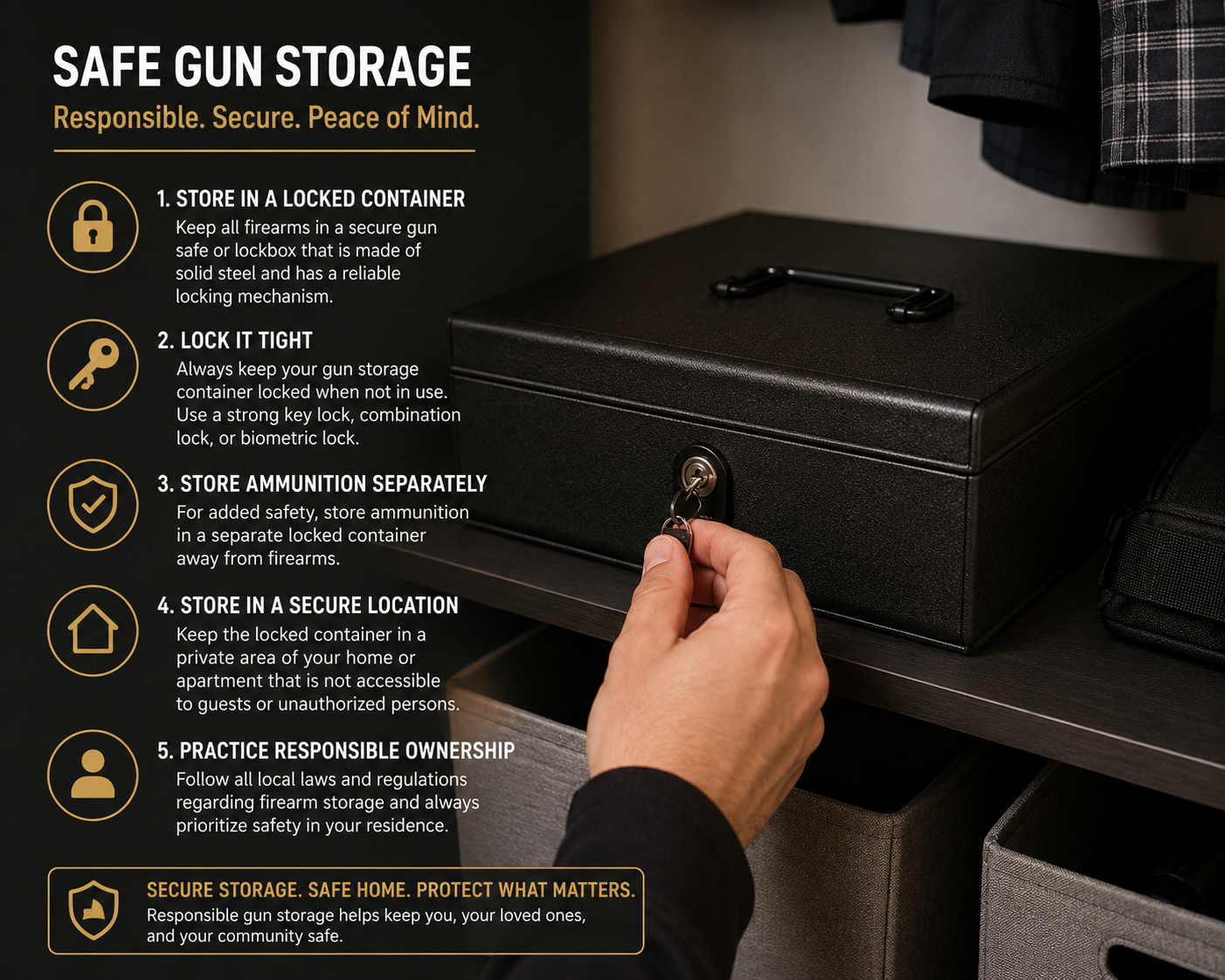
The four core rules every gun owner should follow:
- Always treat every firearm as if it is loaded, even when you know it isn't.
- Never point a gun at anything you are not willing to destroy.
- Keep your finger off the trigger until you are ready to fire.
- Always be certain of your target and what lies beyond it.
Beyond safe handling, regular cleaning and maintenance are critical. A poorly maintained firearm is an unsafe one. Before cleaning any gun, always confirm it is completely unloaded and that no ammunition is anywhere in your work area.
Gun cleaning solvents and oils can be toxic, so store them separately and out of reach of children and pets. If you are unfamiliar with how to properly clean or maintain your specific firearm, consult a professional gunsmith or take a formal safety course before attempting it on your own.
Protecting Children and Teens Around Firearms
Gun owners who share a home with children, or who regularly have young visitors, carry an extra layer of responsibility. No amount of hiding a firearm substitutes for proper storage and open, age-appropriate conversations about guns.
Key steps for protecting children around firearms:
- Start safety conversations early and tailor the message to your child's age and maturity.
- Teach young children that guns are not toys and must never be touched without an adult present.
- Use easy-to-remember frameworks like the Eddie Eagle GunSafe program's four-step rule: Stop. Don't Touch. Leave the Area. Tell an Adult.
- Require older teens to complete a formal gun safety course before any hunting or shooting activities.
- Maintain an ongoing, honest dialogue about guns, their real-world consequences, and your household's safety rules.
It's also important to understand the connection between firearm access and youth suicide. Research consistently shows that easy access to a loaded firearm is one of the most significant risk factors for youth suicide, with a firearm suicide attempt being fatal approximately 90% of the time. Keeping firearms unloaded, locked, and stored separately from ammunition dramatically lowers this risk. Many parents are unaware of this connection, making open conversation all the more essential.
Firearms Storage
Hiding a gun under a mattress or in a bedroom closet is not a storage solution - it's a liability. The consequences of a firearm falling into the wrong hands are too severe to leave to chance, whether that means a curious child, an unauthorized visitor, or a burglar.
For renters, safe storage is also part of being a responsible tenant. Many landlords run tenant background checks before approving an application, and they may write the lease to include rules about firearms, storage, or nuisance concerns, so it's worth reviewing your lease and local laws before moving a gun into an apartment.
The good news is that there is a wide range of secure storage options available at every budget level.
Common storage solutions and how they work:
- Gun safes: The gold standard. Quality safes feature thick steel walls and reliable locking mechanisms (biometric fingerprint, electronic keypad, or mechanical combination). They can secure multiple firearms, deter theft, and many are fire-rated for added protection.
- Lockboxes: A compact and more affordable option, particularly useful for handguns. Always secure the lockbox to a fixed structure so it cannot simply be carried away.
- Trigger locks: Physically prevent the trigger from being pulled, adding a layer of protection even if someone gains access to the firearm itself. Secured by key or combination.
- Cable locks: A steel cable threaded through the firearm's action that prevents it from being loaded or fired. Often the least expensive option, it is a good supplement to other methods.
- Biometric and electronic safes: High-tech options that use fingerprint or palm recognition for fast, keyless access. Ideal for quick-access scenarios while still preventing unauthorized use.


No single method is foolproof. Layering multiple solutions, like keeping firearms in a locked safe with a trigger lock also applied, provides the strongest protection. Be aware that many states have enacted safe storage laws with specific legal requirements for how firearms must be stored in the home. Check your local regulations.
Ammunition Storage
Safe gun ownership doesn't stop with the firearm itself. Ammunition requires just as much care and attention, and it's one of the most commonly overlooked aspects of home firearm safety.
Best practices for storing ammunition safely:
- Store ammunition in a locked container separate from your firearms - two-location storage means that access to one doesn't automatically grant access to both.
- Keep ammo in a cool, dry location with stable temperatures, ideally between 55°F and 85°F.
- Maintain a relative humidity between 30% and 50% - excess moisture causes corrosion and can render rounds unreliable or dangerous.
- Use airtight containers such as military-surplus steel ammo cans; add silica gel desiccant packets to control interior moisture.
- Avoid garages, attics, sheds, and vehicle trunks - these locations are prone to temperature swings and humidity fluctuations that degrade ammunition over time.
- Keep ammo off the floor and away from unfinished walls where moisture can collect.
- Track the age and condition of your supply - retain original packaging or maintain written records of purchase dates.
- Never store corroded, damaged, or suspect ammunition; when in doubt, dispose of it properly rather than attempt to use it.
Rounds that are stored well can remain functional for decades, while improperly stored ammo can become dangerous or fail when you need it most. Think of your ammunition storage habits as an extension of your overall firearm safety plan, and not as an afterthought.
Renters should also consider how firearm and ammunition storage can affect property maintenance. Cleaning oils and solvents can damage furniture, flooring, or finishes if they leak or spill, while storage locations near vents, plumbing access points, damp closets, or shared maintenance areas may be a poor choice. Those are places where you can expose guns and ammo to moisture, odors, corrosion, or accidental discovery during routine repairs. It's also worth checking whether firearms are addressed in any insurance, liability, or personal property clauses within your lease agreement.
Safe Disposal of Firearms and Ammunition
When a firearm is beyond repair, inherited and unwanted, or simply no longer needed, it's critical to dispose of it through a safe and legal channel. The same applies to ammunition that has become corroded, damaged, or otherwise suspect. Never throw ammunition in the trash, attempt to bury it, or soak it in water or oil and assume it's been rendered safe - these approaches are dangerous and in many cases illegal.
Safe disposal options for firearms:
- Contact local law enforcement: Many police departments and sheriff's offices accept unwanted firearms. Call the non-emergency line first to confirm their procedures. Some will even send an officer to your home.
- Gun buyback programs: Many cities host periodic buyback events, often operated by local police or community organizations. These programs typically operate on a no-questions-asked basis and may offer gift cards or other compensation in exchange for turned-in firearms.
- Licensed firearms dealers (FFLs): A licensed dealer can accept your firearm for resale, consignment, or transfer to another legal buyer.
- Donation to a museum: Antique or historically significant firearms may be accepted by museums or historical societies.
What NOT to do:
- Do not throw ammo in the trash (risk of ignition in garbage compactors).
- Do not bury firearms or ammunition (environmental hazard and often illegal).
- Do not attempt to destroy a firearm yourself without following ATF guidelines.
Disposing of a firearm or ammunition through the right channels keeps dangerous items out of circulation and protects your community. Taking the extra steps to do it properly, rather than taking shortcuts, is one final act of responsible ownership. If you are ever unsure about the rules in your area, your local police department's non-emergency line is always a good first call.
Responsible Gun Ownership Is an Ongoing Commitment


Safe gun ownership is a continuous practice, not a one-time checklist. Reassess your storage setup whenever your household changes, stay current on your state's laws, and keep an open dialogue with the people you live with. If you ever have questions, a licensed firearms instructor or your local law enforcement agency is a good place to start. Owning a firearm safely means making sure everyone around you is protected too.
Get the Latest in Real Estate & Property Management!
I consent to receiving news, emails, and related marketing communications. I have read and agree with the privacy policy.


