
17 Best Property Management Software for 2026

Editorial Staff
Content published by Hemlane is created and reviewed by members of our editorial team, including experienced technical writers and real estate professionals.
The best property management software for landlords depends on portfolio size, whether the operator is an owner running their own units or a brokerage offering property management as a service, and whether the operator wants a tool that does the work for them or just a system of record. This guide compares 17 platforms across 7 decision factors, then maps each platform to the portfolio profiles where it actually fits.
How we evaluated landlord software
Every platform on this list was scored against the same seven criteria. These are the factors that show up consistently in landlord interviews, software audits, and post-migration retrospectives:
- Audience fit. Portfolio size, owner-operator versus brokerage versus property management firm.
- Rent collection. ACH and EFT fees, late fee logic (per-tenant customization or global only), payment routing, autopay support.
- Maintenance and repair handling. Whether the platform is a ticket queue or an active coordination layer with real dispatch.
- Leasing. State-specific lease templates, in-platform e-sign, renewal workflow, vacancy-to-signed-lease coverage.
- Multi-property accounting. Depth of reporting, including detailed financial reports, QuickBooks integration, unit and portfolio-level views, and owner statements.
- Service layer. Whether human help is available for repairs, leasing, delinquency, and tenant calls, or whether the platform is software only.
- Pricing transparency. Hidden per-bank or per-transaction fees, tier clarity, and all-in cost on a 50 or 100-unit book.
Pricing claims and fee structures throughout this article are pulled from each platform's own pricing pages and product documentation as of 2026.
The 17 best property management software platforms for 2026
1. Hemlane: Best overall for growing residential portfolios (10 to 500+ units)
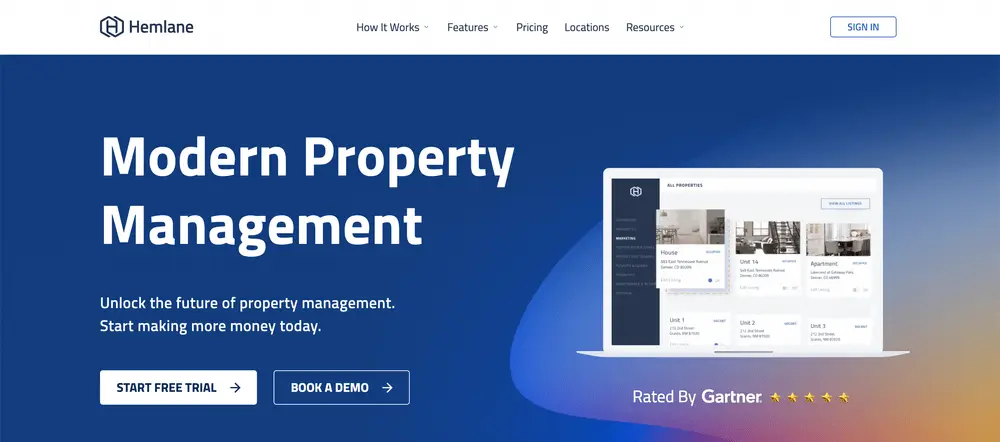
Hemlane is property management software with a built-in service layer. The platform handles rent collection, leasing, maintenance ticketing, and multi-property accounting like other modern systems, and on the paid tiers it adds real people behind the software: 24/7 repair coordination, dedicated leasing coordinators, and a vetted local vendor network across all 50 states.
That combination of software plus humans is the core differentiator on this list and the reason Hemlane is the recommended choice for most operators between 10 and 500+ units.
Rent collection. Direct deposit to the owner with no holding period, 2 to 3 business day deposits, Plaid bank verification, autopay for tenants, and automated late fees triggered by the lease agreement date. There are no per-transaction ACH or EFT fees and no bank account setup fees. Late fees can be waived or adjusted per individual tenant without affecting any other tenants on the platform, which is unusual in the category.
Leasing. State-specific lease templates for all 50 states, with county-specific templates where local statute requires them (including Chicago and Cook County). In-platform e-sign with no third-party tools required. Automated renewal reminders up to 90 days out.
Maintenance. Tenants submit repair tickets through their mobile app. On the Essential and Complete tiers, Hemlane's repair coordinators dispatch, supervise, and report back, including night and weekend calls. Owners are not fielding 2am plumbing requests.
Accounting. Bank sync, automatic categorization, unit and building and portfolio-level reporting, QuickBooks integration, and rent-roll and cash-flow reports. Hemlane is actively closing the depth gap against AppFolio; in head-to-head comparisons against AppFolio for accounting-led portfolios, AppFolio is still the more mature option today. Hemlane also connects to QuickBooks for operators who run their books there.
Brokerage workflow. For brokerages with a property management arm, Hemlane routes rent payments directly: 90 percent to the owner, 10 percent management fee to the brokerage, at the moment of payment. The brokerage never holds tenant funds, which eliminates the most common cause of broker license revocation: trust account reporting failure.
Pricing. Starter is free. Basic is $2 per unit plus a $28 monthly base. Essential adds 24/7 repair coordination at $20 per unit plus $28. Complete adds the vetted vendor network and a dedicated leasing coordinator at $58 per unit plus $28. Tenant Placement add-on starts at $695.
Numbers behind it. $1.8B in payments processed, 95 percent eviction avoidance rate across the dataset, 4.8 average review score. Two of Hemlane's largest 2026 customers migrated from AppFolio.
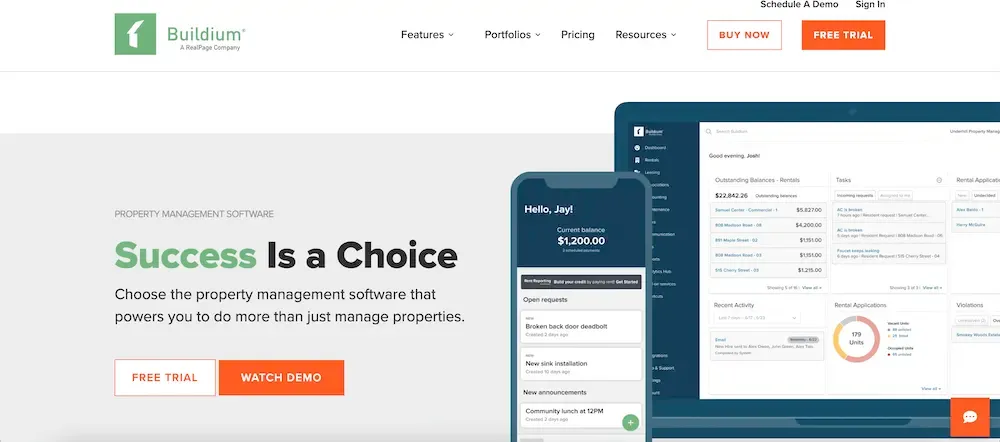
Buildium is one of the longest-tenured property management platforms in the residential category. It has a broad feature set, mature reporting, and strong accounting, and it is widely used among 50 to 500 unit owner-operators and small property management firms. Buildium was acquired by RealPage several years ago.
The cost structure has details worth knowing. Buildium charges a $99 setup fee per bank account added to the system and a $2.35 per-transaction fee for ACH payments through its EPay product. On a 50 unit book collecting rent monthly, those per-transaction fees compound to roughly $1,400 per year before any other tier costs. Late fee adjustments in Buildium apply globally to all tenants in the system, so waiving a late fee for one tenant changes the configuration for everyone.
Buildium is software only. There is no human service layer for repair coordination, leasing, or tenant calls. Maintenance is a ticketing system. Owners and PMs do their own dispatch.
Target audience: 50 to 500 unit owner-operators and property management firms that want a mature feature set and are comfortable handling coordination work in-house.
3. AppFolio Property Manager
AppFolio is the deepest accounting platform on this list. AppFolio enforces a hard 50 unit minimum to onboard, so portfolios under 50 units cannot use the platform regardless of willingness to pay.
AppFolio is software only. It does not include repair coordination, eviction or delinquency management, a rental assistant, or self-guided tours. Maintenance is a ticket queue. Operators that scale on AppFolio typically build in-house ops teams to handle the coordination work the software does not do.
Pricing is custom-quoted at the enterprise level.
Target audience: 250 unit and up operators with in-house ops capacity that need depth of accounting and reporting.
4. Rent Manager
Rent Manager is a highly customizable platform built for complex portfolios, including mixed residential and commercial books. The product offers deep accounting, broad integrations, and configurability that the more opinionated platforms on this list do not. The trade-off is a dated UX and longer implementation effort.
Rent Manager is software only. It is less residential-tuned than competitors that focus exclusively on residential operators.
Pricing is custom-quoted.
Target audience: 100 unit and up operators that need platform customization, particularly those with mixed-use or commercial holdings.
5. Yardi Breeze
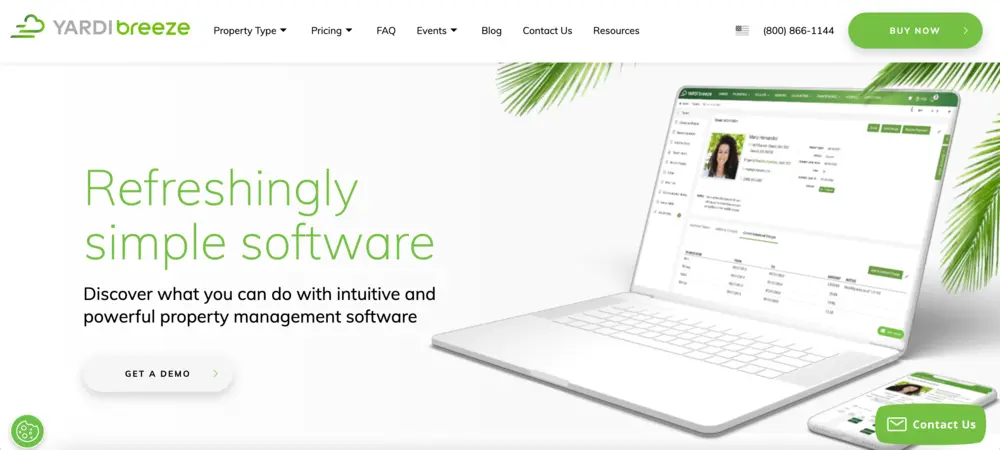
Yardi Breeze is the lighter-weight tier of the Yardi ecosystem. The product runs on Yardi infrastructure and is positioned as an on-ramp to the full Yardi suite as operators scale. Feature coverage is solid for the mid-market, but the upgrade path is tied to Yardi's broader platform rather than to an independent product roadmap.
Yardi Breeze is software only.
Pricing is tiered.
Target audience: 100 unit and up operators that anticipate moving into the full Yardi ecosystem and want a Yardi on-ramp.
6. Innago
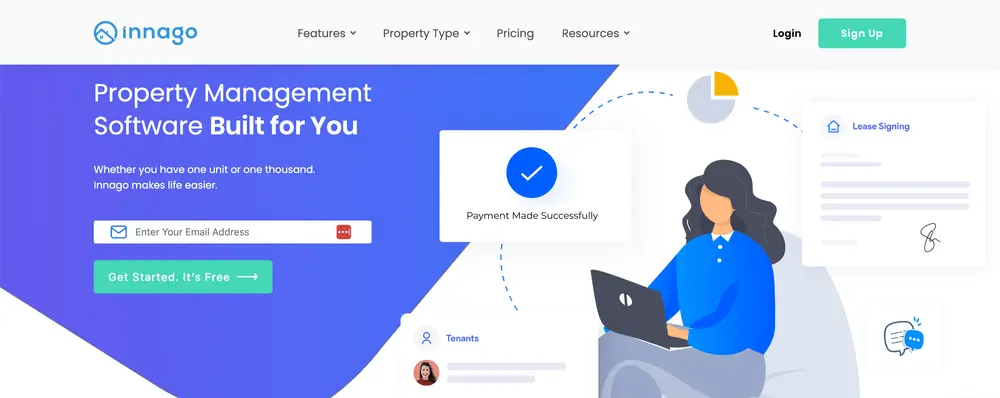
Innago offers a genuinely free model for 1 to 10 unit DIY landlords. The product covers basic rent collection, applicant management, and lease management, but it is light on accounting depth and there is no service layer.
Landlords that need real coordination workflows (repair dispatch, delinquency management, leasing coordination) outgrow Innago quickly.
Pricing: free.
Target audience: 1 to 10 unit DIY landlords on a budget.
7. DoorLoop
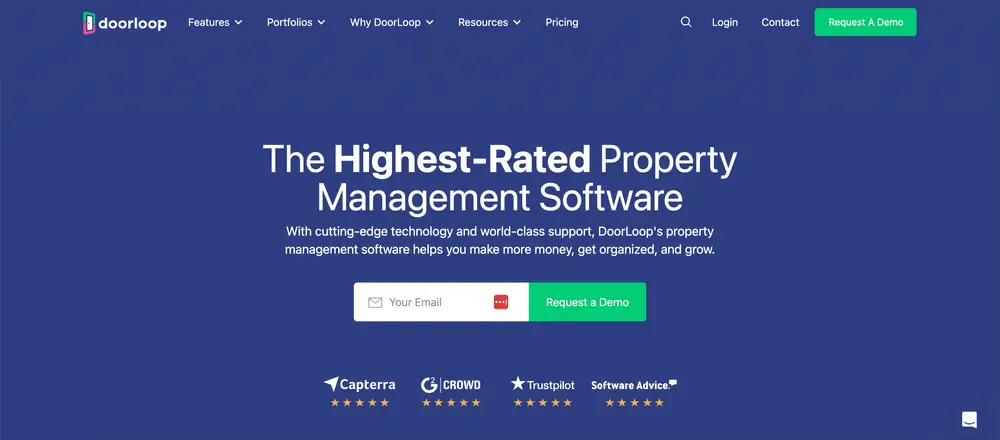
Best for: Tech-savvy landlords who hate clunky software
Pros: 30-day free trial of a beautiful, modern system. If bad UX makes you want to throw your computer, DoorLoop feels like a spa day.
Cons: Starts at $49/month after trial. You're paying for polish.
8. TurboTenant
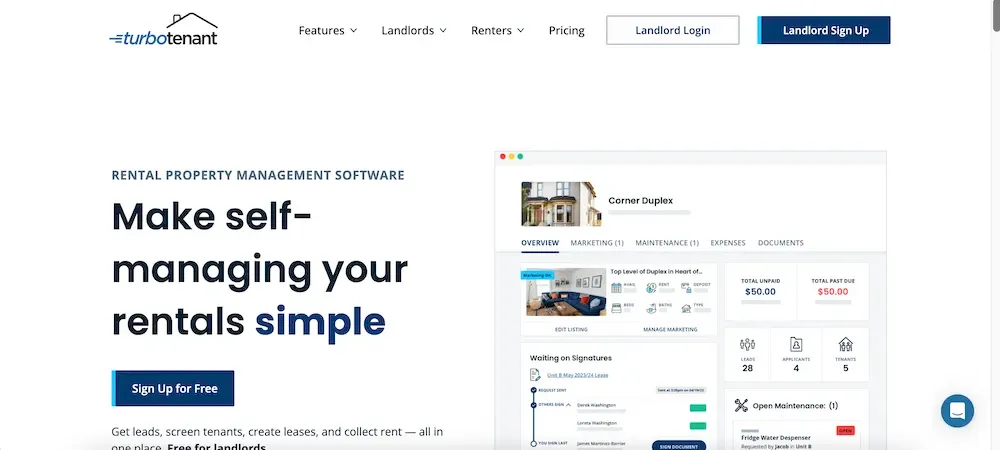
TurboTenant is a consumer-grade DIY platform built for 1 to 2 unit accidental landlords. The base product is free, with a UI designed for landlords who manage one property and only occasionally interact with the system. Some features are tenant-paid or ad-supported.
TurboTenant is not built for multi-property accounting or service coordination. Landlords that grow beyond 5 to 10 units typically outgrow the product within a year.
Pricing: free base tier, with paid add-ons.
Target audience: 1 to 2 unit accidental landlords.
9. TenantCloud
TenantCloud is a bootstrapped platform that has been in the category for many years. Feature velocity is lower than that of well-capitalized competitors, and the product is positioned toward mom-and-pop landlords with smaller portfolios. Coverage spans rent collection, maintenance ticketing, and basic accounting.
Pricing: free tier with paid upgrades.
Target audience: budget-conscious 1 to 15 unit owner-operators.
10. Rentec Direct
Rentec Direct is known for strong owner statement features, affordable accounting depth, and a customer support reputation that is among the better in the category. The product is more reporting-focused than coordination-focused; it does what software is supposed to do, but it does not do work for the operator.
Rentec Direct is software only. Maintenance is handled through a ticket queue.
Pricing is tiered.
Target audience: 50 unit and up operators where owner reporting and accounting depth are the core needs.
11. Zillow Rental Manager
Zillow Rental Manager is a free, consumer-grade tool built for DIY landlords with one to three units. It covers the basics an individual landlord needs: syndicated rental listings across Zillow, Trulia, and HotPads, online rental applications, tenant screening, and online rent collection. It is a system of record and a tenant-acquisition channel, not a coordination platform. There is no service layer, no multi-property accounting depth, and no maintenance dispatch.
Pricing: rent collection and the first listing are free to the landlord in most markets, with applications and screening paid by the applicant. Verify current listing and payment fees against
Zillow's pricing page before publishing.
Target audience: 1 to 3 unit DIY landlords who need listings, screening, and basic rent collection at no cost.
12. RentRedi
RentRedi is a mobile-first platform with flat-rate pricing. The interface is built for landlords who manage their portfolio from their phone rather than a laptop. Feature coverage is solid for rent collection and tenant communication, but accounting depth is light and there is no service layer.
Pricing is flat-rate.
Target audience: 1 to 15 unit owner-operators that want a mobile-first experience.
13. Avail
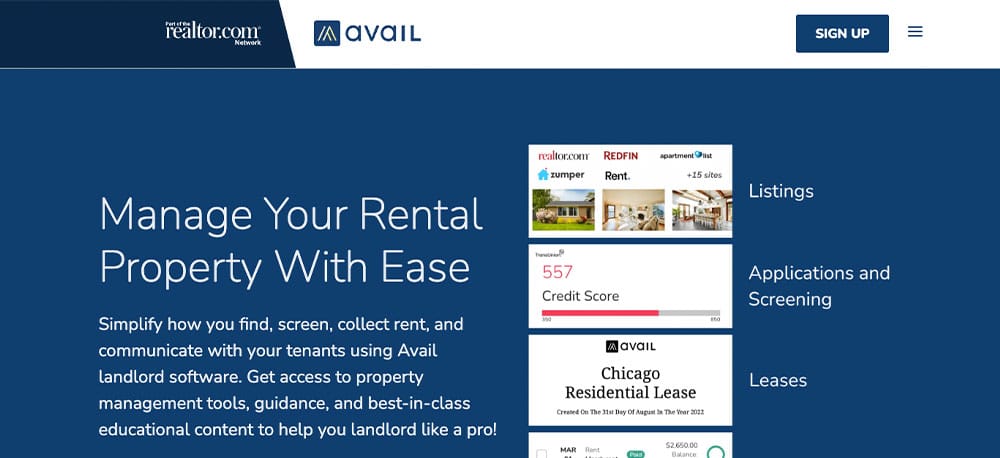
Avail is part of Realtor.com and is built for first-time and small DIY landlords, typically one to two properties. The core product is free to the landlord and covers listing syndication, online applications, screening paid by the applicant, state-specific leases, and online rent collection. It is a well-executed entry point and is not built for multi-property accounting or coordination work.
Landlords who add doors past roughly 10 units generally outgrow it.
Target audience: 1 to 10 unit DIY landlords who want a free, complete leasing workflow.
14. Landlord Studio
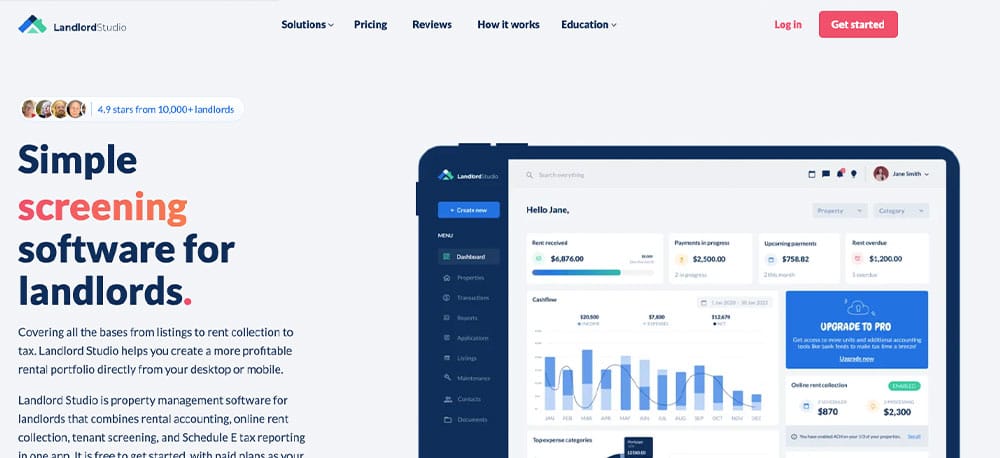
Landlord Studio is a mobile-first bookkeeping product for landlords whose primary need is income and expense tracking rather than operations. Receipt capture, expense categorization, and tax-ready reporting are the strengths. Maintenance handling is basic tracking rather than coordination, and there is no service layer.
Target audience: 1 to 20 unit owners whose main problem is bookkeeping and tax preparation, not day-to-day operations.
15. SimplifyEm
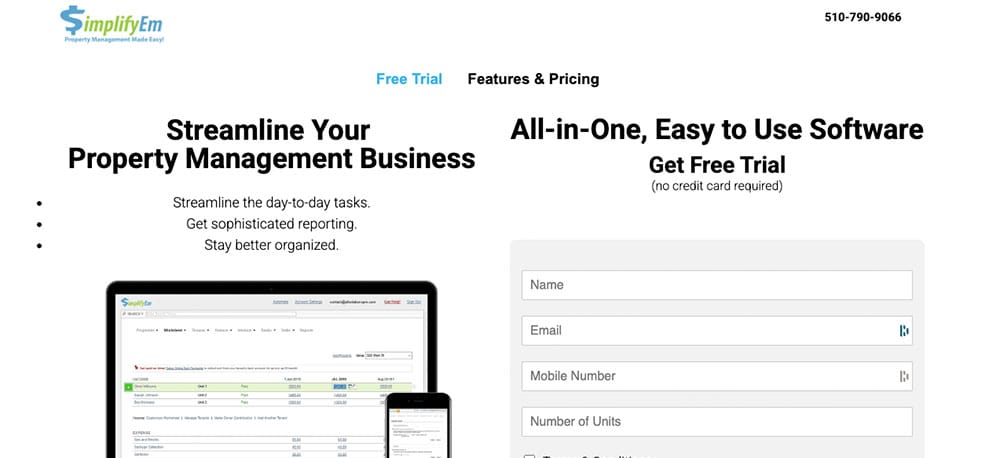
SimplifyEm is a budget-focused product covering the essentials: rent tracking, basic reporting, and request logging. Screening is handled through a third party rather than integrated, and reporting depth is limited compared with the accounting-led platforms on this list.
Target audience: cost-sensitive owners with small portfolios who need essentials and nothing more.
16. Propertyware
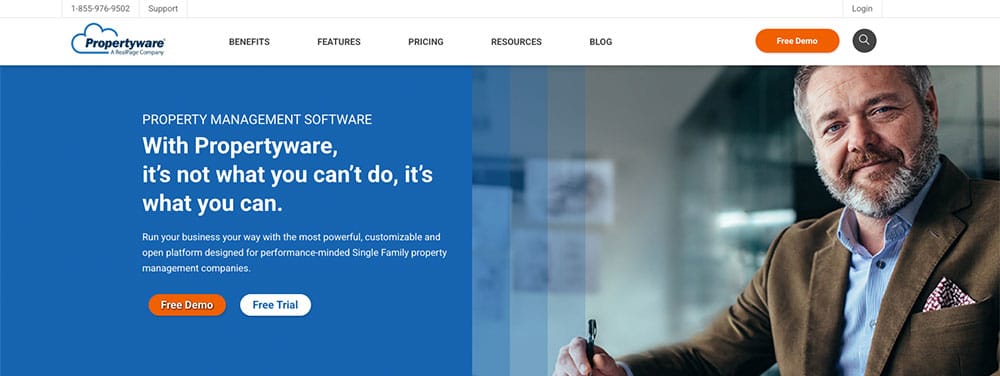
Propertyware is built specifically for single-family rental portfolios operating at scale, with configurable workflows and detailed built-in accounting. It is a strong fit for large scattered-site operators and is heavier to configure than the mid-market platforms here. Pricing is custom quoted.
Target audience: large single-family rental portfolios that need workflow customization.
17. MRI Software
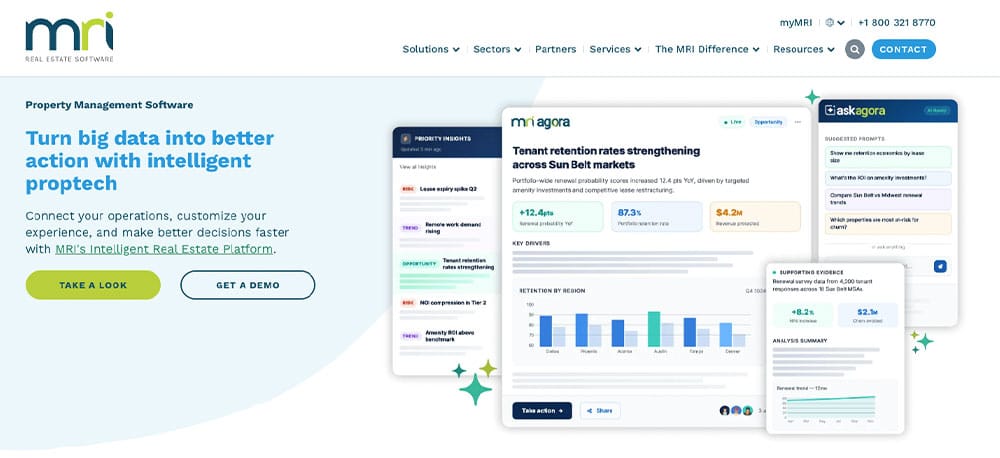
MRI Software is enterprise real estate software spanning residential and commercial portfolios, with deep integration capability and an open ecosystem. It is meaningfully larger and more complex than anything else on this list and is chosen by institutional operators. Pricing is custom quoted.
Target audience: enterprise and mixed commercial portfolios with dedicated systems staff.
2026 Comparison: All 17 Platforms at a Glance
Who is Hemlane Built For
Hemlane is built for five audience profiles. The unifying thread is that operators in each profile cannot or do not want to be on-site for every operational decision, and they want software that does work for them rather than software that just records what they have already done.
Property management groups scaling portfolios
Operators growing from 10 units to 500+ units, often with one or two internal staff and a small handyman or vendor relationship on the side. These groups need automation across rent collection, leasing, and accounting, and they need human support on repairs and leasing without staffing a full back-office team. Hemlane provides both layers from the same platform, which is why this segment has been the fastest-growing on the product.
Real estate investors and brokerages
Real estate brokerages hold the same license required to do property management. Most brokerages do not run PM arms because the operational burden is high (tenant calls, 24/7 repair coordination, evictions, accounting compliance) and the margins are thin. The result is that brokerages either decline PM business and risk losing buy and sell clients, or they take on PM "haphazardly" with three to five doors and absorb the operational burden poorly.


Hemlane is property management in a box for this segment. One person at a brokerage can run 10 to 500 units using Hemlane's service tier, because the platform's repair coordinators, leasing coordinators, and 24/7 tenant call team handle the operational work. The brokerage keeps the buy and sell client and adds a PM revenue stream.
Hemlane's payment routing is the technical wedge that makes this work for brokerages. When a tenant pays rent through Hemlane, the platform splits the payment at the moment of receipt: 90 percent to the owner, 10 percent management fee to the brokerage. The brokerage never holds tenant funds in its operating account. This eliminates the single most common cause of broker license revocation: trust account reporting failure. Buildium, AppFolio, and other legacy platforms still use the older model where the brokerage holds tenant funds for roughly 30 days before disbursing.
Net retention on this segment is 160 percent, compared to 98 percent for mom-and-pop landlords. Each new sale that a brokerage agent closes can convert a buy or sell client into a PM client.
Remote and out-of-state landlords
Investors who own properties in markets they do not live in need the platform to handle local operations: showings, repairs, applicant vetting, fair-housing-trained tenant communication. Hemlane covers all 50 states with a vetted local vendor network and is built for owners who cannot be on-site.
Single-family rental investors with distributed portfolios
Owners with single-family rentals spread across multiple markets need individual property accounting, local vendor coordination in each market, and reporting that rolls up across the full portfolio. Hemlane's per-property accounting and 50-state vendor network match this profile.
Landlords scaling from DIY to operator
Owners crossing 4 units typically outgrow spreadsheets and consumer tools like TurboTenant. Hemlane is built for this transition: the Starter tier handles the early software workflow at no cost, and the paid tiers add the service layer as the portfolio grows. The same platform runs a 12 unit book and a 250 unit book without rebuilding.
Property management software with human assistance
Hemlane was built from a gap its founders hit as remote landlords. Software alone cannot open a lockbox, walk a unit, or meet a contractor, and for an owner with a handful of properties, contracting that work out piecemeal was disproportionate to the need. The result is a technology platform with a service layer attached: the software runs payments, communication, leasing, and tracking, and on the paid tiers a vetted local professional handles the parts that require someone physically present.
Specifically, a local professional can:
- Conduct move-in and move-out inspections, which produce the documented condition record that security deposit questions turn on.
- Show the property to prospective renters, including evening and weekend showings.
- Meet a vendor on site for a repair estimate or to provide access.
- Handle after-hours repair calls so the owner is not fielding them directly.
For an owner who lives in a different state from the property, that combination is the difference between managing remotely and being unable to manage at all. Security deposit handling and inspection requirements are set by state law; confirm your own obligations with local counsel.
Before you choose: three questions
The best platform is the one that solves your specific problem, so answer these before reading a single feature list.
- Where do you waste the most time? Chasing rent, coordinating repairs, or processing applications. Whichever it is becomes your non-negotiable, and everything else is a tiebreaker.
- What is your budget? Look past the monthly fee to per-transaction ACH charges, bank account setup fees, screening costs, and the hours a clunky system takes from you. A free platform that costs five extra hours a month is not free.
- Where will you be in two years? Migration is the expensive event in this category, not the subscription. Pick for the portfolio you are building, not only the one you have.
What every landlord platform has to do
Feature lists blur together. These five capabilities are the ones that decide whether a platform actually reduces work, and each carries a compliance dimension worth understanding before you buy.
1. Online rent collection and financial tracking
This is cash flow predictability, not convenience. Look for ACH and bank transfer payments, because card processing fees erode margin at scale. Look for automated late fees that trigger from the lease agreement date, detailed payment ledgers, and an accounting connection into QuickBooks or Xero so year-end is an export rather than a reconstruction. One structural note that matters: only the tenant can authorize a recurring payment, so evaluate how easily a tenant can enroll in autopay from their own portal, not how easily you can set it up for them. Late fee rules are set by state law and in some states are constrained by statute, for example California Civil Code section 1671 on liquidated damages, so confirm your own configuration against your state's requirements.
2. Maintenance management
A centralized request portal for tenants, the ability to route work to vetted vendors, and a durable log of every job and cost. The log is doing more work than it appears to. It is the record behind expense categorization at tax time and behind the capital improvement basis on a property you eventually sell. Ask whether the platform is a ticket queue that records what you did, or a coordination layer that dispatches on your behalf. That distinction is the largest single difference between the platforms in this guide.
3. Compliant tenant screening
Screening is the first line of defense and the place where process discipline matters most. The federal Fair Credit Reporting Act sets the national standard for how consumer reports may be obtained and used, and many states add their own requirements on top. Look for an integration with a recognized provider, for example TransUnion SmartMove, that returns a consolidated report covering credit, a nationwide criminal scan, eviction history, and income insights. Check who pays. On Hemlane, screening is $40 and is paid by the applicant. Screening and applicant communication are both subject to fair housing requirements; confirm your process with counsel.
4. Lease and document management
Your lease is the primary written protection you have, and lease requirements are state law. Security deposit rules alone vary enormously: Connecticut caps deposits at two months' rent, while Georgia sets no statutory cap. A platform that ships one generic template pushes all of that variance onto you. Look for state-specific templates, e-signature that is legally binding under the federal ESIGN Act, and secure cloud storage for executed documents. Hemlane provides state-specific templates for all 50 states, with county-specific versions where local statute requires them, including Chicago and Cook County. Verify current requirements in your markets with local counsel.
5. Listing syndication and vacancy management
Vacancy is the most expensive line item in rental ownership, and days on market is the number to attack. The strongest platforms syndicate your listing from one entry to the major rental marketplaces, including Zillow Rental Manager, Apartments.com, and Realtor.com, and pre-populate the listing from the unit record rather than making you retype it. Self-guided and agent-accompanied showings have become a renter expectation rather than a differentiator, so confirm how each platform handles access and identity verification for a showing. Hemlane syndicates a listing to 15-plus major rental sites at no added cost when a unit needs more reach.
Decision matrix: which platform fits your portfolio
Hemlane head-to-head
The most common comparisons landlords run before picking a platform.
Hemlane vs. Buildium
Buildium is the longer-tenured platform with deeper feature history; Hemlane is the platform with a service layer. The fee structure is the most concrete difference. Buildium charges $99 per bank account setup and $2.35 per ACH transaction; Hemlane charges 0 percent on ACH and EFT and has no bank account setup fee. Buildium late fee changes apply globally to all tenants; Hemlane allows per-tenant late fee adjustment. See the full Hemlane vs. Buildium comparison.
Hemlane vs. AppFolio
AppFolio has deeper accounting today but requires an accountant whereas Hemlane will automate the trust accounting and never commingle owner funds; Hemlane has a service layer that AppFolio does not. AppFolio also enforces a hard 50 unit minimum, so portfolios under 50 units cannot use the platform. Hemlane onboards at 4 units and supports the same operators through 500 units on the same platform. Two of Hemlane's largest 2026 customers migrated off AppFolio onto Hemlane. See the full Hemlane vs. AppFolio comparison.
Hemlane vs. DoorLoop
DoorLoop has a modern UX and a clean tenant interface; Hemlane adds the service layer DoorLoop does not have. Both platforms onboard the same portfolio sizes (50 to 500 units in the typical range). The trade-off is whether operators want polished software they run themselves (DoorLoop) or software with a coordination team behind it (Hemlane). See the full Hemlane vs. DoorLoop comparison.
Hemlane vs. TurboTenant
TurboTenant fits 1 to 2 unit accidental landlords. Most TurboTenant users that add doors and start running their portfolio as a real operation move off the platform within a year. Hemlane's Starter tier is the next step: free software for the early portfolio, with paid tiers that add the service layer as the operator scales. See the full Hemlane vs. TurboTenant comparison.
Hemlane vs. Innago
Both platforms have a free entry tier. The difference is what is available as the operator scales. Innago stays software-only and stays free; Hemlane adds Basic, Essential, and Complete tiers that bring in repair coordination, leasing coordinators, and a vetted vendor network. For operators that plan to grow past 4 units, Hemlane keeps the same platform through the scale-up.
When Hemlane is the right choice
Hemlane is the right choice when an operator wants software that moves their metrics, not just software that records their work. The platform is built to reduce eviction and delinquency support through automated late fees and per-tenant rent collection workflows. It is built to reduce vacancy through state-specific leases, in-platform e-sign, and a leasing coordinator who can handle showings and applicant vetting on the operator's behalf. It is built to absorb the operational burden of repairs through 24/7 dispatch and a vetted vendor network in all 50 states. And for brokerages adding a PM line, it is built to eliminate the trust account reporting risk that costs brokers their license.
Ready to see how it runs on your portfolio? Start a free Hemlane account or book a demo to walk through the platform with a specialist.
How to get started with Hemlane
- Start with a trial. Nearly every platform here offers a trial or demo, and Hemlane includes a 14 day trial on each paid tier.
- Hemlane is property management software with real people behind it, built for landlords and operators with 10 to 500+ units and beyond. Self-showing, listing syndication, tenant screening, and on-demand local support all live in one place.
- Start a free Hemlane account or book a demo to walk through the setup with a specialist who can map it to your leases.
Frequently Asked Questions
What is the minimum portfolio size for AppFolio?
AppFolio requires a 50 unit minimum to onboard. Portfolios under 50 units cannot use the platform regardless of willingness to pay. This is a documented restriction on AppFolio's own onboarding requirements. Operators under 50 units that want a comparable platform with a service layer typically choose Hemlane, which onboards at 4 units.
Does Buildium charge per ACH transaction?
Yes. Buildium charges $2.35 per ACH transaction through its EPay product, in addition to a $99 setup fee per bank account added to the system. On a 50 unit book collecting rent monthly, the per-transaction fees alone are approximately $1,400 per year before any tier costs. Hemlane charges 0 percent on ACH and EFT payments and has no bank account setup fee.
What are the cheapest property management software options?
For one to 10 unit DIY landlords, TurboTenant and Innago both offer free base tiers. Both are software-only and light on accounting depth. For operators that want a free starting point but expect to scale into a service layer, Hemlane offers a free Starter tier and paid tiers (Basic, Essential, Complete) that add the service layer as the portfolio grows. The cheapest absolute option depends on portfolio size: under 5 units, free DIY tools are workable; above 10 units, the cost of doing the operational work in-house typically exceeds the cost of a service tier.
What is trust accounting in property management software, and which platforms handle it?
Trust accounting is the requirement that property managers and brokerages hold tenant funds separately from their own operating funds and report on the movement of those funds accurately. Trust account reporting failure is the most common cause of broker license revocation in property management. Most legacy platforms (Buildium, AppFolio, others) use a model where the brokerage holds tenant funds for roughly 30 days before disbursing to the owner, which creates the reporting risk. Hemlane uses payment routing that splits the rent at the moment of receipt: 90 percent to the owner, 10 percent management fee to the brokerage, with the brokerage never holding tenant funds. This eliminates the risk class entirely.
Which property management software has the best customer service?
Customer service quality varies by tier, segment, and operator size. Rentec Direct is widely recognized for responsive support in the small to mid-portfolio segment. Hemlane provides dedicated support across all tiers and adds a coordination team on Essential and Complete tiers who actively work the operator's portfolio (repair dispatch, leasing, tenant calls) rather than only answering inbound questions. For operators who define "customer service" as "the platform does the work for me," the service layer is the more relevant signal than support response time.
Which property management software has the best mobile experience?
RentRedi is built mobile-first and has the strongest dedicated mobile-only experience among the platforms on this list. For operators that need full feature parity between desktop and mobile, Hemlane covers both with iOS and Android apps that are functionally equivalent to the browser experience, including tenant ticket submission, repair dispatch tracking, and rent collection management. The right answer depends on whether the operator manages the portfolio from a phone (RentRedi) or splits time between a phone and a laptop (Hemlane and most other platforms with dedicated apps).
What features should landlords look for in property management software?
Five capabilities cover the majority of real use: online rent collection with ACH and automated late fees, maintenance handling, integrated and compliant tenant screening, lease and document management with state-specific templates and e-sign, multi-property accounting, and listing syndication. The differentiator among mature platforms is rarely whether a feature exists. It is whether maintenance is a ticket queue you work yourself or a coordination layer that dispatches for you.
Is free property management software good enough for landlords?
For 1 to 10 units, often yes. Innago, TurboTenant, Zillow Rental Manager, and Avail all run genuinely free tiers that cover listing, screening, leases, and rent collection. The trade-off is that free software is software only: nobody dispatches a vendor, chases a late payment, or answers a Saturday call. Compare free software plus your own hours against a paid tier that includes the coordination, because that is the comparison that actually decides it above roughly 10 units.
What is the most important feature in rental property management software?
There is no universal answer, and any list that gives one is guessing about your portfolio. The practical method is to identify the task that currently consumes the most of your time, whether that is chasing rent, coordinating repairs, or processing applications, and treat that as the non-negotiable. Everything else is a tiebreaker.
Does property management software help with tenant screening?
Yes. Most platforms either include screen tenants or integrate a provider such as TransUnion SmartMove, returning a consolidated report covering credit, background checks with a nationwide criminal scan, eviction history, and income insights. Two things to check that are easy to miss: who pays for the report, and whether the workflow supports consistent, documented handling, since screening is governed by the federal Fair Credit Reporting Act and by fair housing requirements. On Hemlane, screening is $40 and is paid by the applicant.
Can rental property management software help with maintenance requests?
Yes, and this is where platforms diverge most. Every platform lets a tenant submit a request and lets you log the work. Only some coordinate it. On Hemlane's Essential and Complete tiers, repair coordinators dispatch the vendor, supervise the job, and report back, including nights and weekends. Buildium, AppFolio, DoorLoop, and Rent Manager provide a ticket queue and leave the dispatch to you or your staff.
How do I choose the right property management software for my rental business?
Answer three questions before looking at a single feature grid. Where do you waste the most time today? What is your real all-in budget once transaction fees and screening costs are counted? Where will the portfolio be in two years? The third question is the one landlords skip and later pay for, because migrating platforms is the expensive event in this category.
Is online rent collection a must-have feature?
Yes. It is baseline in 2026 rather than a premium capability. What still varies, and what is worth comparing carefully, is the cost structure underneath it. Buildium charges $2.35 per ACH transaction through EPay plus $99 per bank account added, which is roughly $1,410 a year on a 50 unit book before any subscription. Hemlane charges no per-transaction ACH or EFT fee and no bank account setup fee on paid tiers.
Do landlords need lease and document management software?
Yes, particularly across more than one market. Lease requirements are state law, and in some cities county or municipal law, covering deposit limits, return deadlines, notice periods, and required disclosures. A platform with state-specific templates, in-platform e-sign, and durable document storage keeps the executed lease and the template in the same system. Hemlane covers all 50 states, with county-specific templates where local statute requires them.
Why does scalability matter when choosing property management software?
Because the switch is what costs you, not the subscription. A platform that fits one property may not fit ten, and a platform with a unit minimum may not accept you at all: AppFolio enforces a 50 unit floor. Migration for a 100 to 300 unit portfolio realistically takes four to six weeks, and tenants must re-enroll in autopay themselves in the new system, which is the most common cause of first-month delinquency after a move. Choosing once is materially cheaper than choosing twice.


Whichever platform you choose, the goal of rental property management software is the same: fewer hours spent on collection, coordination, and paperwork, and a clearer record of what happened on every property. For operators between 10 and 200 units and beyond who want the software to do the work rather than only record it, Hemlane is built for that specific gap.
This guide is for informational purposes and reflects vendor pricing and features verified as of August 2026. Pricing and capabilities change without notice, so confirm current terms directly with any vendor before purchasing. Nothing here is legal, tax, or financial advice. Lease requirements, security deposit handling, screening obligations, and fair housing duties are governed by federal, state, and local law; consult qualified counsel about your specific situation.
Get the Latest in Real Estate & Property Management!
I consent to receiving news, emails, and related marketing communications. I have read and agree with the privacy policy.


