
The $3,300 Question: Your Mortgage is Overcharging You

Editorial Staff
Content published by Hemlane is created and reviewed by members of our editorial team, including experienced technical writers and real estate professionals.
Property Management Pulse
Research has found that 90% of homebuyers are paying $3,300 more each year in mortgage payments than they could be, just because they’re not shopping around for mortgages. Snagging a better deal, experts say, could be as simple as getting a few different quotes and negotiating.
In the past, homeowners used to pick a home for the views it offers. But now, times are a-changing, and people prefer robust security systems and clean air over views (due to climate change-related disasters). It should come as no surprise, then, that more than 60% of Americans do not want data centers in their backyard. They’re noisy, eat up all of your clean water and electricity, and are a bit of an eyesore.
Climate change is also worsening affordability by raising home insurance premiums. And if that weren’t bad enough, insurers are pulling back, refusing to offer policy renewals to homeowners in disaster-risk areas.
Hemlane Brief
- 6.65%: Average 30-Year Fixed-Rate Mortgage
- 2.5%: Inflation Rate
- 0.3%: Change in Rent MoM
You May Be Overpaying Your Mortgage… By $3,300
Are your housing costs taking up a bigger bite of your income pie than you expected? The problem might be your mortgage rates, but not in the way you think.
A recent research from Bankrate found that 9 out of 10 homebuyers are overpaying for their home loans by $3,300 a year. Calculate this overpayment over a 30-year loan, and you’ll find that you are losing out on a whopping $78,186 in extra fees and interest: enough money to send your kids to college, pay off a chunk of your student loans, or invest in a new car.
Bankrate says that this discrepancy is all thanks to a simple mistake that homebuyers commonly make, i.e. assuming that all lenders offer the same interest rates and not shopping around for mortgage rates.
“Not many people realize just how much money there is to be saved and just how much of a difference even 25 basis points [0.25%] on your rate could save you over the course of the mortgage,” says Alexei Alexandrov, a mortgage industry researcher and former chief economist of the Federal Housing Finance Agency.
In fact, the research found that, in many metros, homebuyers are actually overpaying by as much as 0.8 percentage points, giving lenders tens of thousands of money more than they have to.
Of course, the exact amount of easily-avoidable money you’re parting with depends on where you live.
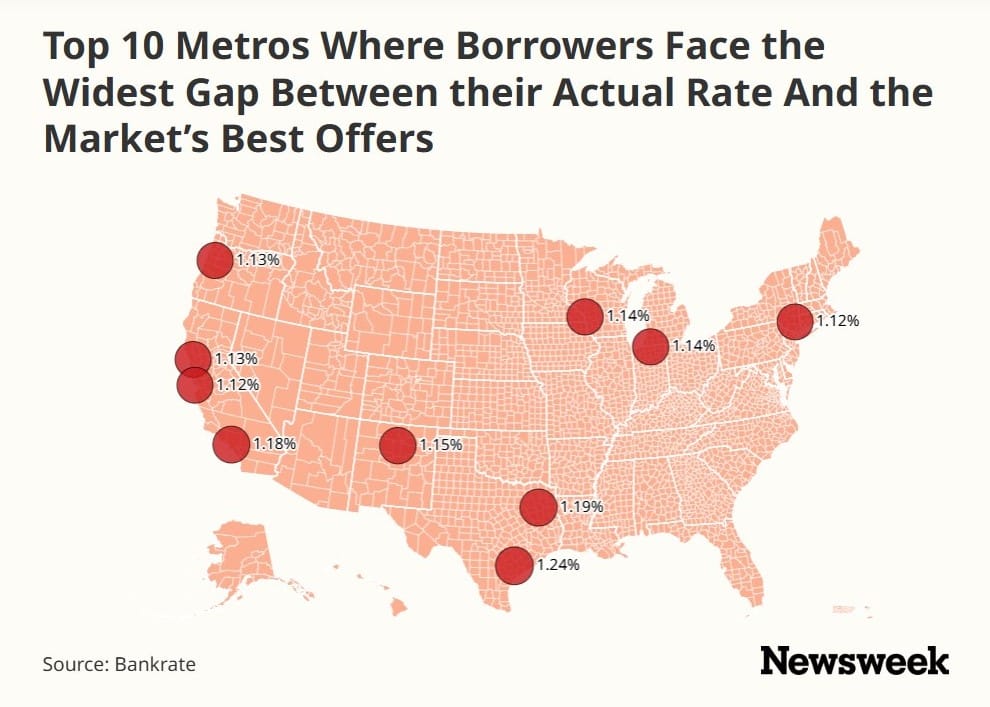
Here are the places where homebuyers are getting the worst deals, with the widest gaps between their actual rate and their markets’ best offers:
That’s… a lot. But, there’s a way to avoid this hidden homeownership tax. Just take the time to compare the interest rates offered by a few different lenders to find the most competitive one. Remember that, as a buyer, you have the leverage, so don’t shy away from asking for a better deal.
Americans Want Security and Clean Air Over Views
Picking a house for the views it offers is so last decade. In 2026, priorities have changed. While views still remain one of the top reasons to pick a home, what house hunters value more are security systems and clean air, found a recent 2026 Redfin survey conducted by Ipsos.
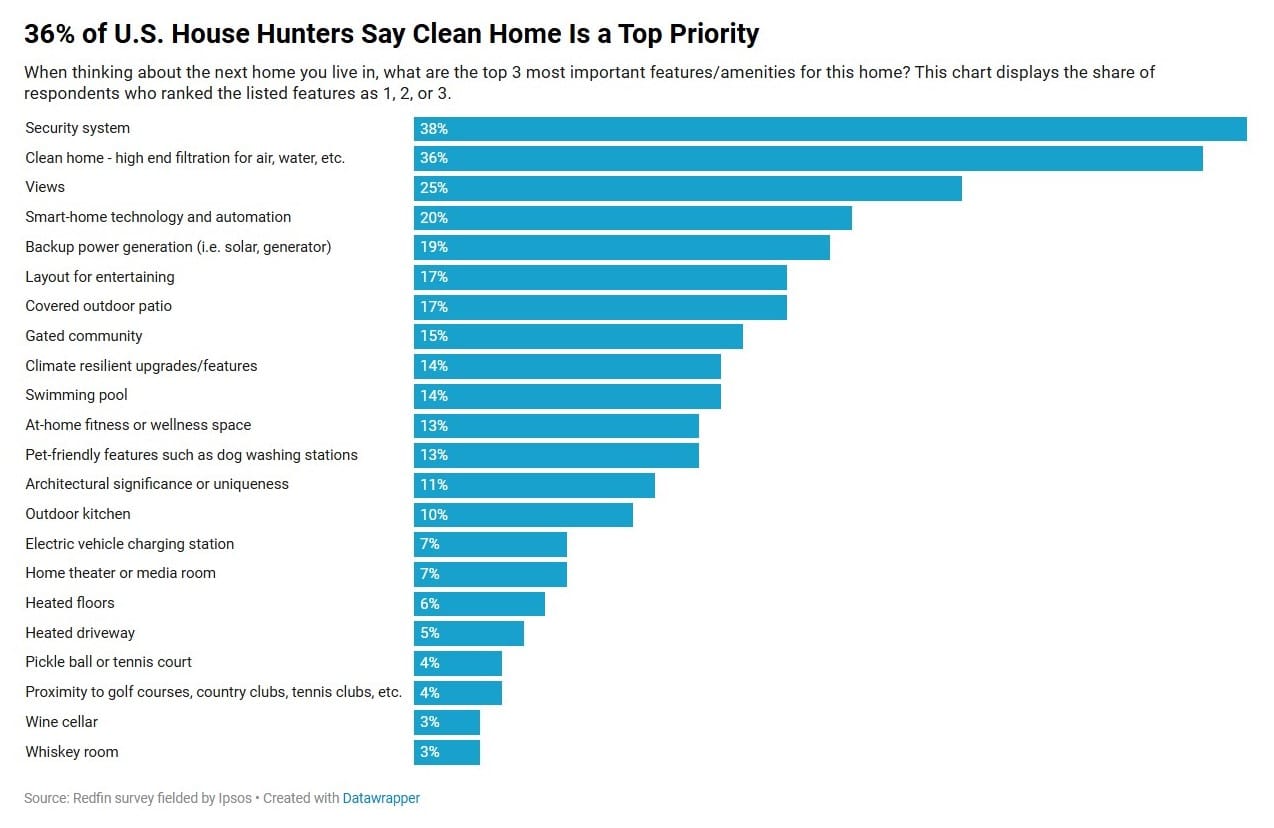
38% of U.S. residents who are planning a move within the next year say that having a robust home security system in their next home matters more than any other feature. Coming in at a close second, 36% of survey respondents agreed that having a clean home, with high-end air and water filtration systems, is also a non-negotiable.
Take a look at the other amenities that Americans consider important, and you’ll notice a broader trend where health, security, and climate risk-related features are all among the high ranking ones.
15% of would-be homebuyers prioritize living in a gated community, while 14% want homes with climate-resilient features and upgrades. 13% on the other hand would like homes that have fitness or wellness spaces.
When split by generations, 37% of millennials said that having a clean indoor environment was their #1 priority (right up there with security systems). Among Gen Z, the numbers are even higher, with 42% prioritizing security systems, while 40% want clean homes.
Even Gen Xers agree that security systems (32%) and clean homes (25%) are must-haves. The only outliers are Baby Boomers, where 47% of them still like homes with a view.


Why this heavier emphasis on clean homes and security in recent years? The answer is simple: people are feeling the devastating effects of climate-related disasters (such as wildfires), and are looking for spaces that make them feel safer and healthier.
“As wildfire smoke becomes more common, filtered indoor air is becoming a must-have rather than a nice-to-have,” said Redfin Chief Economist Daryl Fairweather.
Data Centers? In Our Backyards? No, Thank You
Americans are increasingly turning against AI data centers in their backyards, and we have two recent surveys to back that evidence up.
According to a Redfin survey conducted in May, 53% of Americans oppose the construction of data centers in their backyards.
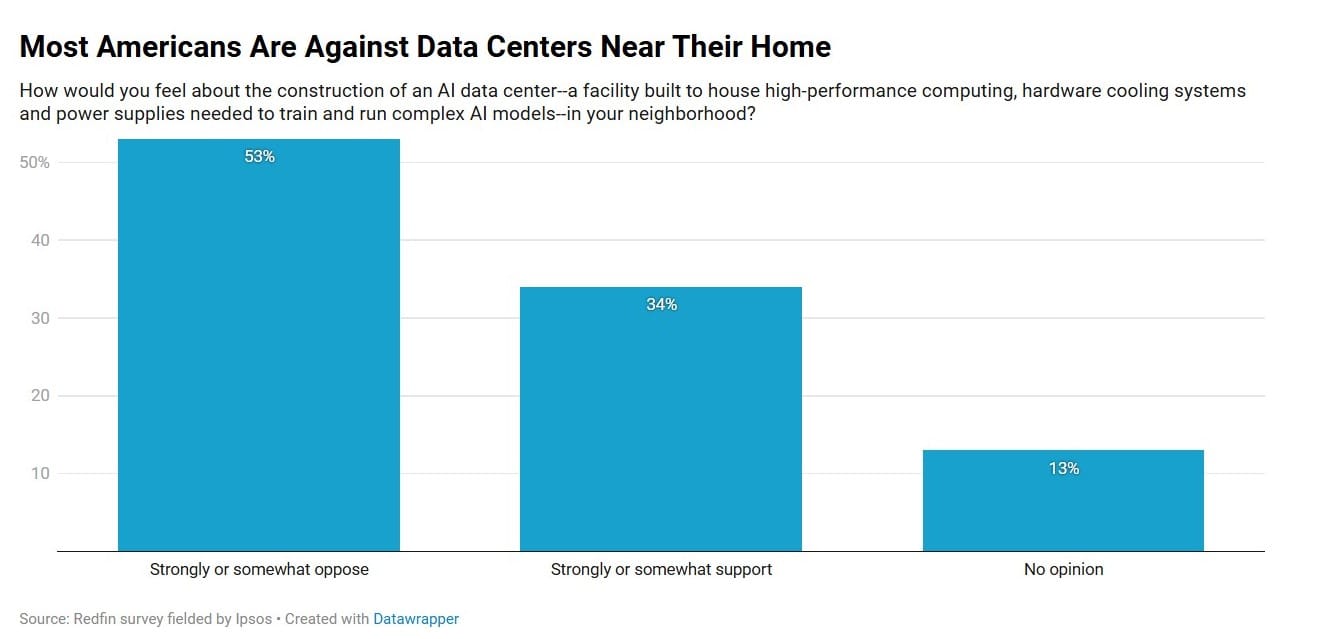
Baby Boomers (65%) and Gen Xers (60%) were among the generations who opposed these AI buildings the most. But, the younger generations weren’t far behind, either, with 43% of millennials and 42% of Gen Zers saying “not in my backyard” to data centers.
In more recent news, a poll conducted by Emerson College in July found that 63% of voters do not want data centers in or near their community. This marks an increase from Redfin’s May survey, as well as a 21% increase from when the poll was last conducted in December 2025.
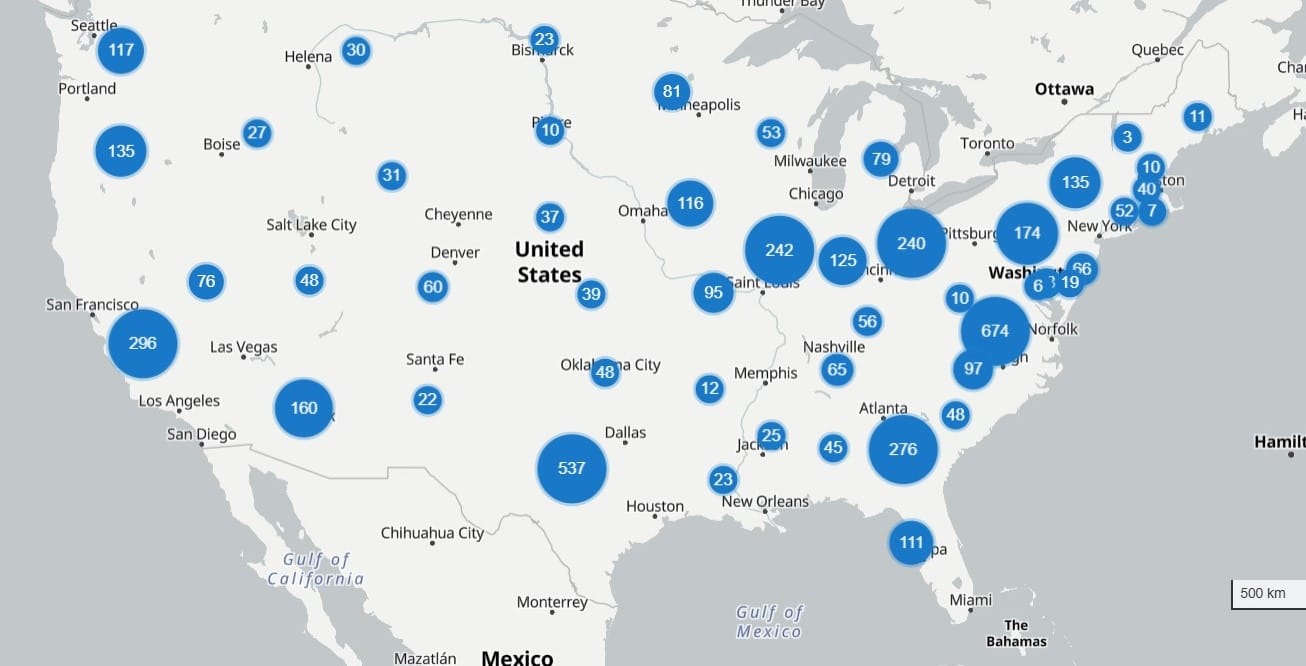
If these surveys weren’t enough, then the data documented by the Data Center Opposition Report should do the trick. The organization has been keeping track of local groups that have banded together to try and stop AI data centers from cropping up in their neighborhoods.
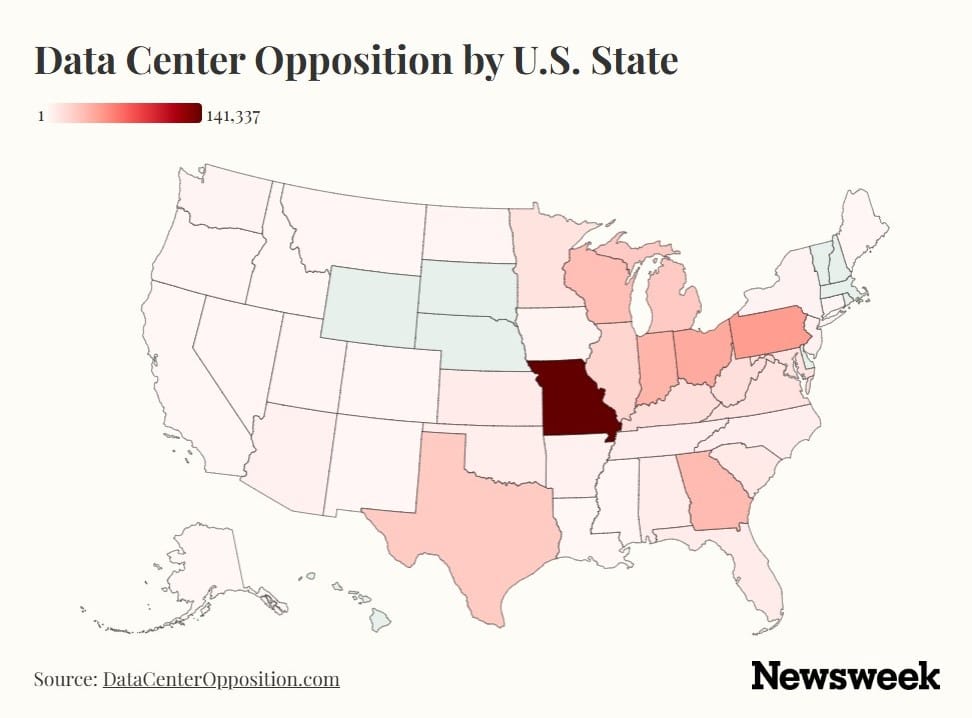
What it found was this: there are currently at least 430 grassroots organizations spanning 40 states that are opposing data centers. And nearly half of them (192, to be exact) were created in the last three months!
This makes sense, considering that there are nearly 5,000 data centers in the U.S. While most of them are concentrated in Northern Virginia, Texas, California, and Georgia, they’re spread pretty much across every state.
What’s driving this clear shift? The negative effects of data centers of people’s lives. Not only do they use up most of the water and electricity, leaving precious little for the people while increasing the energy bills, data centers are also noisy. Their large, looming structures don’t go well with residential neighborhoods as well.
Data centers also feed into the larger problem of housing affordability. The National Association of Homebuilders (NAHB) reported that data center developers are paying “impossible prices” to grab land, outbidding homebuilders.
The more this happens, the less land there is for housing. Consider the fact that we’re already short of affordable homes, and this could become a bigger problem down the line.
The Tables Have Turned: Insurers are Now Dropping Homeowners
If you’ve noticed a surge in home insurance premium costs recently, you’re not alone. It’s a problem shared by all of America, owing to higher building material costs (thanks, tariffs and global conflicts) and more frequent natural disasters.
The National Association of Insurance Commissions (NAIC) analyzed the premium hikes between 2018 and 2024. The numbers are just in, and they don’t look good. Western U.S. saw a surge of 43% in average insurance premiums, the Southeast saw a 27% hike, while the Midwest and Northeast saw increases of 25% and 18% respectively.
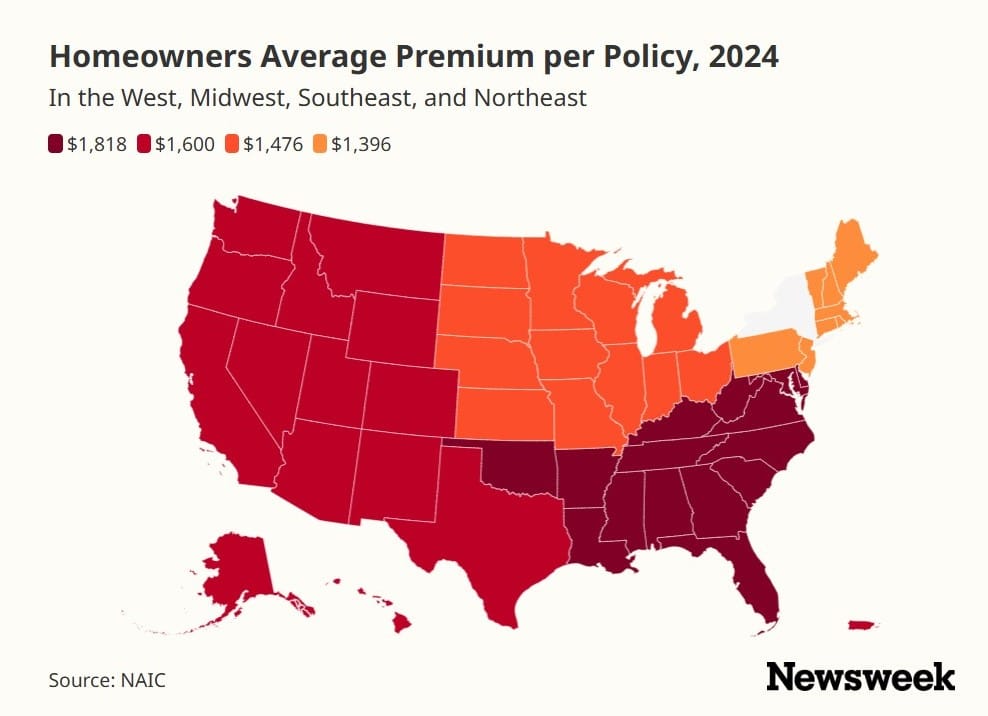
The producer price index by the Bureau of Labor Statistics further reports that premiums have gone up by another 7% since the beginning of 2025. Unsurprisingly, this has translated into a crisis, especially for disaster-prone areas such as Texas.
The average homeowner insurance premium in Texas went from $2,296 in 2019 to $2,983 in 2024: a massive 30% hike in the span of five years. This increase has put a serious dent in homeowners’ bank accounts, pricing thousands out of the market. And that’s just one example.
While these rising premium costs are exacerbating the housing affordability crisis, it’s only part of the problem. The other pressing issue is that insurers are increasingly deciding not to renew homeowners’ policies, which means homes in disaster-prone areas may have no choice but to stay uninsured.
According to NAIC, insurer-initiated nonrenewal rates increased between 96% and 216% during the five-year period.
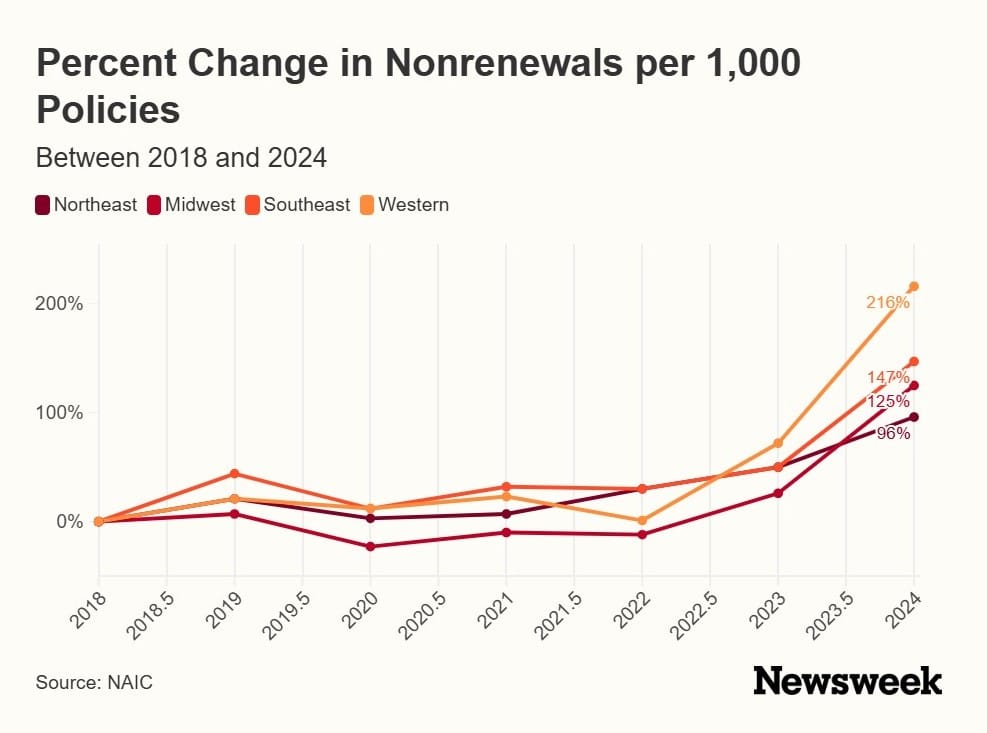


The Southeast saw the biggest pullback in insurance policies at 216%, with the Northeast following with a 147%.
“A nonrenewal notice can be a bigger problem than a higher premium. A higher bill is painful, but at least you still have coverage,” says John Espenschied, agency principal and owner at Insurance Brokers Group. “A nonrenewal can leave a homeowner with limited choices, less coverage, and a much higher cost if they wait too long.”
Get the Latest in Real Estate & Property Management!
I consent to receiving news, emails, and related marketing communications. I have read and agree with the privacy policy.


